

When it comes to metalworking, brass is widely used because of its excellent corrosion resistance, good machinability, ductility, and attractive appearance. However, cutting brass efficiently requires the right saw blade and cutting parameters.
As an experienced saw blade supplier, we understand that choosing the correct blade can have a significant impact on cutting speed, accuracy, tool life, and surface finish. In this blog post, we'll explore several types of saw blades commonly used for cutting brass, the key factors to consider when selecting a blade, and some practical tips for achieving better cutting results.
Types of Saw Blades for Cutting Brass
High-Speed Steel (HSS) Saw Blades
High-speed steel (HSS) saw blades are a common choice for cutting brass. HSS is known for its good heat resistance and toughness, allowing the blade to maintain its cutting performance under continuous operation.
HSS blades can be used for various brass-cutting applications and are suitable for both manual and powered cutting equipment. They are also relatively cost-effective, making them a practical option for small-scale operations and applications where cutting speed is not the primary concern.
However, compared with carbide-tipped blades, HSS saw blades generally have a shorter service life when used for high-volume or heavy-duty cutting. For this reason, they may require more frequent sharpening or replacement in demanding production environments.
Tungsten Carbide-Tipped (TCT) Saw Blades
Tungsten carbide-tipped (TCT) saw blades offer higher cutting performance and longer tool life compared with conventional HSS blades. The carbide tips provide excellent hardness and wear resistance, allowing the blade to maintain a sharp cutting edge for longer periods.
TCT saw blades are suitable for a wide range of brass-cutting applications, including brass sheets, profiles, tubes, and bars. They can also support higher cutting speeds when the blade design and machine parameters are properly matched to the material.
For example, our TCT Aluminium Saw Blade can also be used for cutting brass in suitable applications. Its high-quality carbide tips and optimized tooth geometry help provide clean cuts, stable performance, and good service life.
For workshops and manufacturers that require consistent cutting performance and higher productivity, TCT saw blades are often a practical choice.
Diamond-Tipped Saw Blades
Diamond-tipped saw blades can be used in specialized cutting applications where exceptional wear resistance, cutting precision, or surface finish is required. However, they are not necessarily the first choice for general-purpose brass cutting.
Compared with HSS and TCT blades, diamond-tipped saw blades are significantly more expensive and are therefore typically selected for specific applications where their performance advantages justify the additional cost.
For specialized cutting requirements, our Corrugated Diamond Saw Blade is designed to provide efficient cutting and long service life when working with selected hard or abrasive materials.
Before choosing a diamond-tipped blade for brass, it is important to consider the specific brass alloy, workpiece shape, cutting equipment, required surface finish, and operating conditions.
Key Factors When Choosing a Saw Blade for Brass
Choosing the right saw blade is not simply about selecting the hardest or most expensive blade. Several factors should be considered to achieve the best balance between cutting performance, tool life, and cost.
1. Brass Alloy
Different brass alloys have different levels of hardness, ductility, and machinability. The composition and condition of the brass can affect blade selection and cutting parameters.
2. Tooth Geometry
Tooth shape, rake angle, tooth pitch, and the number of teeth all influence cutting performance. The appropriate tooth geometry can help reduce cutting resistance, improve chip removal, and produce a cleaner cut.
3. Blade Material
HSS, TCT, and diamond-tipped blades each have different performance characteristics. The best choice depends on the application, production volume, cutting speed, and required finish.
4. Cutting Speed and Feed Rate
Even a high-quality saw blade may perform poorly if the cutting speed or feed rate is not properly matched to the material and blade specifications. Following the recommended operating parameters can help reduce heat buildup, tooth wear, and premature blade damage.
5. Required Surface Finish
If the application requires a clean and precise cut, tooth configuration and blade quality become particularly important. Choosing the correct blade can help reduce burrs and improve the final surface finish.
Tips for Cutting Brass Successfully
To achieve consistent cutting results, consider the following practices:
Select a saw blade specifically designed or suitable for non-ferrous metals.
Choose the correct tooth pitch and geometry for the thickness and shape of the brass workpiece.
Use the recommended cutting speed and feed rate for the selected blade.
Make sure the brass workpiece is securely clamped before cutting.
Keep the blade properly aligned with the workpiece.
Use an appropriate cutting lubricant or coolant when recommended for the application.
Inspect the blade regularly and replace or sharpen it when cutting performance begins to decline.
Conclusion
Choosing the right saw blade for cutting brass depends on several factors, including the brass alloy, workpiece dimensions, cutting equipment, production volume, required cutting speed, and surface finish.
HSS saw blades can be a cost-effective option for general-purpose and lower-volume applications, while TCT saw blades are often better suited to demanding production environments that require higher productivity and longer tool life. Diamond-tipped blades may be considered for specialized applications where their specific performance advantages justify the higher cost.
At our factory, we provide different types of saw blades for various metalworking applications. If you are looking for a suitable saw blade for cutting brass, we can help you evaluate your material, application, machine, and cutting requirements to identify a suitable solution.
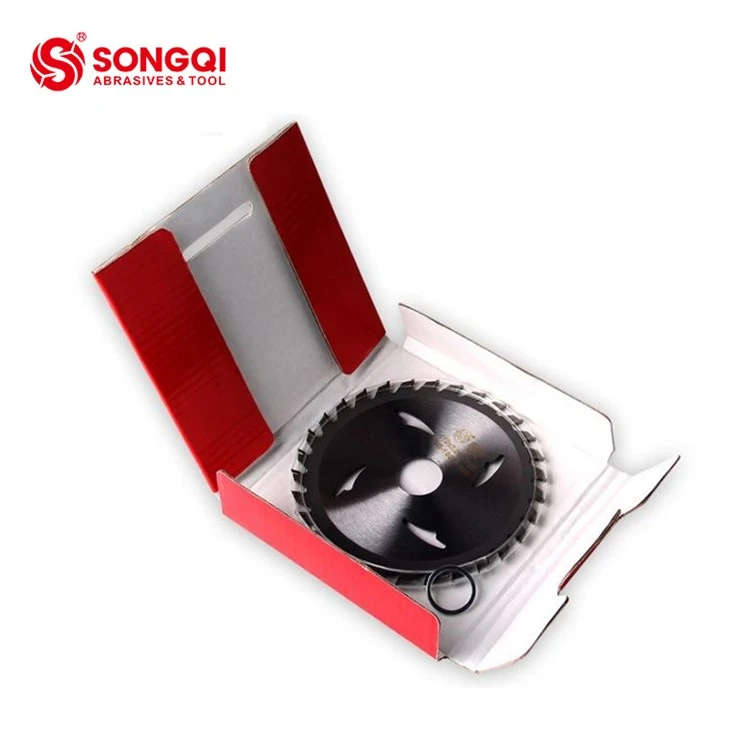

Key Considerations When Choosing a Saw Blade for Cutting Brass
Choosing the right saw blade for brass depends on several factors, including the material thickness, brass alloy, cutting equipment, blade diameter, tooth geometry, and required cutting finish. Selecting a blade that matches the specific application can help improve cutting efficiency, reduce burrs, and extend blade service life.
Tooth Geometry
Tooth geometry plays an important role in cutting performance. When cutting brass, the appropriate tooth pitch and tooth configuration should be selected according to the size and shape of the workpiece.
For thinner brass sections, a finer tooth pitch can help provide a smoother cut and improve control. For thicker brass bars or profiles, a coarser tooth pitch may provide better chip clearance and more efficient cutting.
The appropriate tooth geometry also depends on the type of saw blade and application. Carbide-tipped blades designed for non-ferrous metals may use specific tooth configurations to reduce cutting resistance, improve chip removal, and achieve a clean surface finish.
Rather than selecting a tooth count based only on material thickness, it is important to consider the blade diameter, workpiece dimensions, machine specifications, and manufacturer's recommendations.
Blade Thickness and Kerf
Blade thickness affects the kerf width, cutting stability, and material removal rate.
A thinner blade produces a narrower kerf and can reduce material waste. However, it may provide less lateral stability and may not be suitable for heavy-duty cutting or applications involving large brass sections.
A thicker blade generally provides greater rigidity and stability, particularly when cutting larger or heavier workpieces. However, it also produces a wider kerf and may require more cutting power.
When selecting blade thickness, consider the brass workpiece, machine power, blade diameter, required cutting accuracy, and manufacturer's specifications rather than relying on a single thickness range.
Blade Diameter
Blade diameter should be compatible with the saw and the dimensions of the brass workpiece.
Larger-diameter blades can generally provide greater cutting depth, making them suitable for larger workpieces or applications requiring deeper cuts. However, they also require compatible equipment and sufficient machine power.
Smaller blades are commonly used on compact cutting tools and applications where portability or access to confined areas is important.
Always check the saw manufacturer's specifications for the maximum blade diameter, arbor size, and recommended operating speed before selecting a blade.
Tips for Cutting Brass with Saw Blades
Use Appropriate Lubrication
Proper lubrication can help reduce friction and heat generation during cutting. Depending on the equipment and application, a suitable cutting fluid or lubricant may help improve blade life, cutting performance, and surface finish.
The appropriate lubricant depends on the brass alloy, cutting process, machine, and production requirements. Always follow the recommendations of the blade and equipment manufacturers.
Set the Correct Cutting Speed and Feed Rate
Cutting speed and feed rate have a significant impact on blade performance and cut quality.
Excessive cutting speed can generate excessive heat and accelerate tooth wear, while an inappropriate feed rate may increase cutting resistance or affect the surface finish.
For the best results, follow the recommended operating parameters for the specific blade and machine. The appropriate settings should take into account the blade diameter, tooth geometry, brass alloy, workpiece dimensions, and cutting equipment.
Ensure Proper Blade Installation
Correct blade installation is essential for safe and consistent cutting.
Before operation, make sure the blade is installed in the correct direction and is securely mounted on the machine. The arbor, flange, and mounting surfaces should also be clean and free from debris.
A blade that is incorrectly installed or improperly secured can cause vibration, poor cutting performance, premature wear, or safety hazards.
Always follow the equipment manufacturer's installation and safety instructions.
Our Saw Blade Solutions
As a professional saw blade supplier, we provide a range of saw blades for different cutting applications. The most suitable blade depends on the material, machine, workpiece dimensions, and required cutting performance.
For customers working with brass and other non-ferrous metals, we can recommend suitable blade configurations based on the specific application.
For example, our 114x20x1.8mm Wall Trough Saw Blade can be considered for specific applications where its dimensions and cutting characteristics match the customer's equipment and workpiece requirements.
We also provide TCT Saw Blades and other carbide-tipped solutions. However, the suitability of a specific blade for brass should be confirmed based on its tooth geometry, carbide grade, blade specifications, machine requirements, and intended application.
If you are unsure which blade is suitable for your brass-cutting application, providing us with the material type, workpiece dimensions, machine model, blade size, and required cutting result can help us recommend a more appropriate solution.
Contact Us for Your Saw Blade Requirements
Choosing the right saw blade can make a significant difference in cutting efficiency, blade life, and final product quality.
If you are looking for a suitable saw blade for cutting brass, our team can help you evaluate your application and recommend an appropriate blade configuration. We can provide product information, technical specifications, and OEM/ODM solutions for different cutting requirements.
Whether you need standard saw blades or customized solutions for a specific application, we are ready to discuss your requirements and help you find a suitable option.
References
ASM Handbook, Volume 6: Welding, Brazing, and Soldering, ASM International.
Machinery's Handbook, Industrial Press.
Metal Cutting Theory and Practice, CRC Press.