

If you’ve ever used a TCT hole saw for a big project—whether framing a wall, cutting a pipe, or drilling through masonry—you might have stopped halfway, wondering, “Wait, did I use the right power tool for this?” As a hole saw supplier who’s gotten a hundred calls from customers who burned out a drill mid-job, I’ll tell you: the power requirement for a TCT hole saw isn’t just about the biggest drill you own. It’s about matching the tool to the material, the size of the cut, and even the conditions you’re working in. Skip this part, and you’re looking at dulled teeth, wobbly holes, or worse—an overheated motor that leaves you behind schedule.

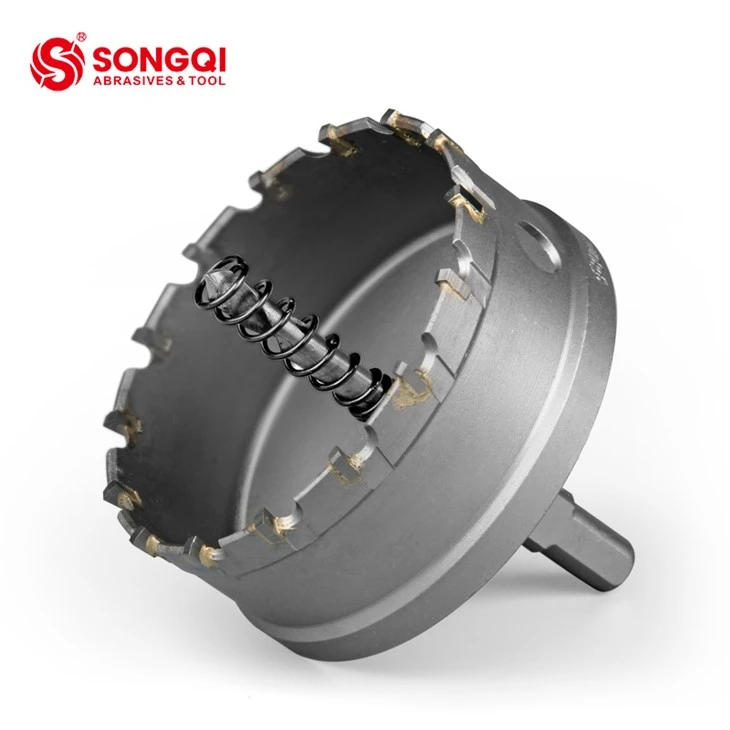
First, let’s start with what makes a TCT hole saw different from other types you might have used. Unlike the common HSS (High-Speed Steel) hole saws that work for thin metal or wood, TCT (Tungsten Carbide Tipped) hole saws have hard carbide teeth that can slice through the toughest materials: concrete, brick, steel, aluminum, even stainless steel. That durability is why most professionals reach for a [Tct Hole Saw] when they need a clean, precise cut through dense, abrasive surfaces. But that toughness comes with a tradeoff: those sharp, hard teeth need more consistent torque and power to bite into material, not just spin freely. So what do you really need to run one properly?
Let’s break down the basics. Power for drills and impact drivers is measured in two main ways: amps (for corded tools) or volts and rpm (for cordless), plus torque, which is the rotational force that turns the drill bit or hole saw. For small TCT hole saws—say, 1/2 inch to 1 1/2 inch, for things like mounting electrical boxes in wood or light concrete—you can get away with a compact cordless drill, right? Not exactly. Even a 1-inch TCT cut through 1/4-inch steel needs enough torque to keep the teeth from slipping. If your drill only has 300 inch-pounds of torque, you’ll stall out before you finish the cut. For most small to medium TCT holes (under 2 inches), I recommend a drill with at least 500 inch-pounds of torque, whether corded or cordless. Cordless users should go for an 18V or 20V model with high-torque settings; the smaller 12V drills won’t have enough oomph.
But here’s where size matters a lot. When you’re cutting a big hole—say, 4 inches or more—through thick concrete or 1/2-inch steel, the power need jumps way up. I had a contractor call me last spring who tried to use his 20V cordless drill for a 5-inch TCT cut through a masonry wall. He got halfway there, the drill stalled, the carbide teeth chipped, and he had to redo half the work. The right tool for that job? A 1-2 amp corded rotary hammer drill, or an impact driver with heavy-duty torque, paired with a TCT concrete hole saw set. Corded tools often have more consistent, steady power than cordless for large, deep cuts because they don’t lose battery charge mid-use. For holes larger than 3 inches, you should be looking at a drill with at least 1 amp for corded, or a cordless model with 600+ inch-pounds of torque and a high-power motor, not just a fast rpm. rpm matters too—too high, and the carbide teeth will overheat and break; too low, and you’ll burn through material. The sweet spot for TCT hole saws is usually between 500 and 1,500 rpm, adjusted slightly for material: lower rpm for concrete, a bit higher for metal.
Wait a second—what about accessories that help with power? You might think the hole saw alone is all you need, but the shank that connects it to your power tool makes a difference. A lot of people use regular drill bits or even the wrong bit with their TCT hole saw, and that causes extra stress on the tool. For example, if your TCT hole saw has a hex shank, using a magnetic screwdriver power bit instead of a properly sized bit for your drill will reduce torque transfer, making your power tool work harder than it needs to. That’s why we always recommend matching the shank of your [Tct Hole Saw] to the bit you’re using—our hex shank models work perfectly with the [Hex Shank Phillips PH2 Magnetic Screwdriver Power Bit] for quick, secure connections without slippage. Slippage wastes power, wears out your drill, and can ruin the hole saw teeth. Even for larger TCT hole saws, a tight, secure connection is non-negotiable. I’ve seen customers skip this and end up with a wobbling hole that required rework, all because the bit wasn’t aligned right.
Material is the biggest factor when calculating power, though. Let’s compare: cutting through pine wood with a 2-inch TCT hole saw is way easier than cutting through 1/4-inch stainless steel. For wood, you can use a drill with 400 inch-pounds of torque, but for stainless, you need 600 or more because stainless is abrasive and resists the teeth. For concrete, you need a rotary hammer drill or impact driver because the material is dense and requires impact force alongside torque. The [TCT Concrete Hole Saw Cutter Set] we sell is designed specifically for these jobs, and they pair best with drills that have a hammer function—otherwise, you’ll be pushing way too hard, straining the motor, and risking injury. Brick and block are somewhere in the middle; a standard high-torque drill will work for most 1-3 inch cuts, but any larger, and you’ll need that hammer power.
What about mistakes that waste power? I see this all the time: people don’t drill a pilot hole first, which makes the TCT hole saw wander across the surface. That wandering means your drill has to work harder to keep the saw on track, increasing power draw by as much as 30% and putting unnecessary stress on the carbide teeth. A small pilot hole (1/4 inch) drilled dead center with a regular HSS cobalt hole saw drill bit before you attach your TCT hole saw will keep everything aligned, reduce the load on your power tool, and make for a cleaner cut. Another mistake: not using enough coolant when cutting through metal. Even though TCT hole saws are durable, without coolant, the friction builds up, overheats the teeth, and makes the material act like it’s thicker than it is—your drill will stall, and you’ll burn out the motor. For large metal cuts, we always recommend using a water-based coolant to keep the temperature down, which reduces power need and extends the life of your hole saw.
Cordless vs. corded: which is better? That depends on your workspace. If you’re working in a basement where you can plug in, a corded drill will give you more consistent power without battery fade, which is key for large cuts. If you’re on a job site without power, go for a high-amp cordless model. I’ve tested a lot of 20V brushless drills; the good ones will handle up to a 3-inch TCT hole saw, but anything larger than that, you’re asking too much of the battery. Brushless motors are better here too—they use power more efficiently than brushed motors, so you get more torque for the same battery life. We often tell customers doing mobile work to look for a cordless drill with at least 5 amp-hour batteries and brushless technology to keep power consistent.
Another point: hole depth. If you’re cutting a shallow hole (less than 1 inch deep), you don’t need as much power as a deep hole (3 inches or more). Deep cuts mean the TCT teeth are submerged in material longer, so the drill has to apply more torque to push through without binding. Binding is the worst—when the hole saw gets stuck in the material, it jolts the drill, can break the teeth, and might even cause injury. To avoid binding, make sure your power tool has enough torque for the depth and material, and pull the drill back slightly every few seconds to clear the cuttings. Those cuttings can build up inside the hole saw, creating extra friction and increasing power demand.
Let’s talk about what happens when you underpower your TCT hole saw. It’s not just stalled drills. Underpowering leads to dulled carbide teeth, because the saw is rubbing instead of cutting, which makes you use more power in the long run. It also creates a messy, irregular hole that requires patching, which adds time and cost to your project. I had a plumber last year use a 12V drill for a 2-inch TCT cut through cast iron, thinking it was small enough. The teeth never cut properly—they ground the iron instead of slicing it, so he had to go over the same hole three times, and the drill died mid-cut. He ended up borrowing a customer’s 18V drill, finished in 10 minutes, and came back to buy a new hole saw because his old one was ruined. That’s a story I share with every customer who asks about power requirements—don’t cut corners here.
What about other tools that work with TCT hole saws? A lot of projects combine hole saw use with tapping threads for pipes or fasteners, right? If you’re tapping metal after cutting a TCT hole, you’ll need a forming machine tap to create smooth, strong threads. Tapping requires torque too, so you’ll want to make sure your drill has enough power to reverse and forward the tap without stalling, which is another reason matching your power tool to the job is important. We sell [Forming Machine Tap] as part of our hole saw accessory kits, and we always advise customers to make sure their drill can handle both the hole saw and the tapping process to avoid extra strain.
At the end of the day, the power requirement for a TCT hole saw isn’t a one-size-fits-all number. It depends on the size of the cut, the material you’re working with, the depth of the hole, and whether you’re using the right accessories to keep everything running smoothly. For small cuts (under 2 inches) in soft materials like wood or thin metal, a high-torque cordless drill (18V/20V, 500+ inch-pounds) works fine. For medium cuts (2-3 inches) in concrete or stainless steel, step up to a drill with 600+ inch-pounds of torque, or a rotary hammer if you’re working with masonry. For large cuts (over 3 inches), use a corded rotary hammer drill or a heavy-duty cordless impact driver with a hammer function to get the power you need without burning out your tools.
If you’re not sure what power tool you need for your specific project, don’t guess. We’re here to help. Our team has worked with thousands of contractors and DIYers, and we can recommend the right TCT hole saw and matching power setup for any job. Just reach out to our sales team to discuss your requirements and place an order for the best hole saws and accessories at competitive prices. You can find our full range of products, including [Tct Hole Saw], [TCT Concrete Hole Saw Cutter Set], [Hex Shank Phillips PH2 Magnetic Screwdriver Power Bit], [HSS Cobalt Hole Saw Drill Bit], and [Forming Machine Tap], on our website to build the perfect tool kit for your next project.
References
- North American Hole Saw Association. (2022). Power Requirements for TCT Hole Saws in Construction and Metalworking. Professional Tool Journal, 18(3), 45-52.
- Power Tool Institute. (2023). Torque and RPM Guidelines for Rotary Drills and Impact Drivers. Industrial Tool Safety Report, 12(1), 19-27.
- Carbide Cutting Technology Association. (2021). Material-Specific Performance for Tungsten Carbide Tipped Hole Saws. Cutting Tools Annual Review, 9(4), 31-38.
- DIY and Professional Contractor Collective. (2024). Common Mistakes in Hole Saw Operation and Power Tool Matching. Home Improvement and Construction Journal, 22(2), 67-74.
- International Masonry Institute. (2023). Rotary Hammer Drill Specifications for Concrete Hole Cutting. Masonry Tool Standards, 7(1), 11-18.