

If you’ve ever stared at a cinder block wall, a weathered concrete patio, or a thick concrete slab and wondered which drill bit will get the job done, you’re not alone. As a carbide drill bit supplier, I get dozens of questions a week from contractors, DIYers, and handymen asking the same thing: Can carbide drill bits be used on concrete? It’s a fair question—carbide is known for being tough, right? And concrete is notoriously hard and abrasive. The short answer is yes, but it’s not as simple as grabbing any carbide bit and going to town. There are a few key details about how carbide works, what concrete is made of, and which types of drill bits are actually suited for this work that make all the difference between a successful project and a broken bit, a damaged drill, or even an injury.
Let’s start with the basics to set the stage. Concrete isn’t just a pile of cement dust. It’s a composite material made of Portland cement, water, and aggregates—usually sand, gravel, or crushed stone. Those aggregates are the tough part. Gravel and crushed stone are much harder than cement, and they’re what you’re actually drilling through for most concrete jobs. A drill bit that works on wood or even metal might crumble against those aggregates because those materials don’t have that same dense, abrasive structure. Steel, for example, is much more homogeneous than concrete. While high-speed steel (HSS) bits work great for thin steel, they dull quickly when pushed into concrete, especially if there’s exposed aggregate. I always tell customers: if you’ve used a regular steel bit and it’s already smoking or stopping mid-drill, concrete is not its friend.
Now, what makes carbide different? Tungsten carbide is a compound of tungsten and carbon, and it’s one of the hardest man-made materials used in common tools—harder than steel, with excellent heat resistance. That’s why it’s so popular for drill bits that need to hold an edge through tough, abrasive materials. Not all carbide bits are the same, though. There’s a big difference between the carbide tips on a general-purpose bit and the heavy-duty carbide-tipped bits designed specifically for masonry. That’s where a lot of people make mistakes. They grab a carbide bit meant for wood or metal, think it’ll work for concrete, and end up frustrated.
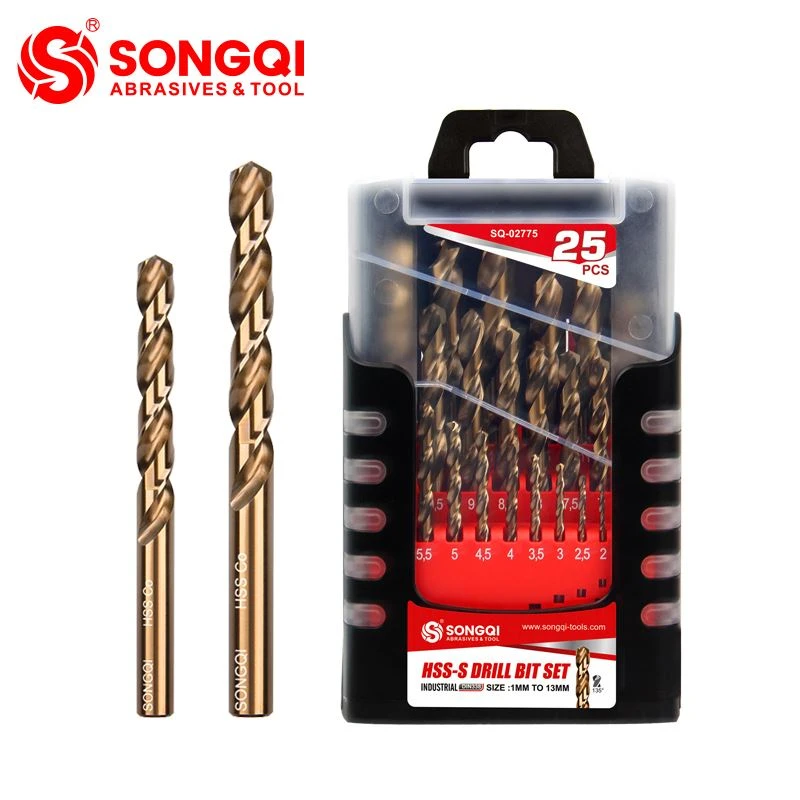
For example, if you were drilling metal, a twist bit would be your go-to—something like a HSS M35 cobalt twist drill bit, which is designed for high-heat, high-torque work on steel and other hard metals. It has a sharp, spiral fluted edge that cuts through metal cleanly, but it doesn’t have the strength to push through concrete aggregates. Same with the SONGQI M2/M35 double end twist drill bit for metal drilling—great for consistent, clean cuts in steel, but not built to handle the impact of concrete. Those bits are designed for rotational cutting, not the hammering action that’s usually needed for concrete.
That’s a critical point: drilling concrete isn’t just about spinning a bit. Most concrete drilling requires a hammer drill, which delivers both rotational force and rapid, small hammer blows to the bit, breaking up the concrete as it goes. Regular drills (even powerful ones) won’t work well for concrete because they can’t generate that hammer action. The right drill bit for concrete needs to be able to withstand that repeated impact, not just the cutting force of rotational drilling. So a carbide bit that’s designed for metal, made to spin at high speeds without taking repeated hits, is not going to work here.
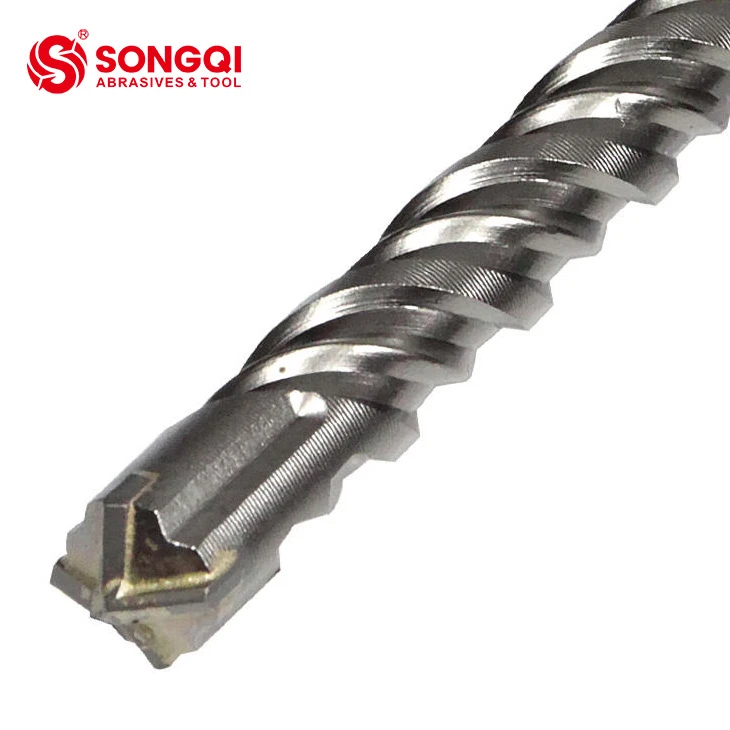
Now, the good stuff: when carbide drill bits are suitable for concrete. There are two main scenarios where carbide bits shine for concrete work, as long as they’re the right type. First, for light to medium concrete work—like drilling small holes (¼-inch to ½-inch) in thin concrete slabs or cinder blocks—carbide-tipped masonry bits (often called “masonry drill bits with carbide tips”) work well. These bits have a hardened steel shank with a single carbide tip at the end, shaped like a chisel or a pointed star to break up concrete as the hammer drill works. The carbide tip is hard enough to chip through the aggregates, while the steel shank is strong enough to handle the hammer and rotational force.
The second scenario is for heavier concrete work, where you might need to drill larger holes or work with thicker, more dense concrete. For that, you’d want something like a SDS Max drill bit. SDS (which stands for “Slotted Drive System”) bits are designed to fit into hammer drills that have a special chuck that allows the bit to move slightly forward and backward as the drill operates, amplifying the hammering force. SDS Max bits have a carbide tip that’s much larger and more robust than standard masonry bit tips, and the flutes are wider to clear concrete dust and debris quickly. These bits can drill holes up to several inches in diameter in thick concrete, and they’re the workhorses of construction sites.
So why do some people say you shouldn’t use carbide drill bits on concrete? The confusion usually comes from two places: mixing up the type of carbide bit, and not matching the bit to the drill and the job. If you take a carbide bit meant for metal (like the HSS M35 cobalt twist drill bit I mentioned earlier) and try to drill concrete with it, two things will happen. First, the carbide tip isn’t designed to take the repeated hammering, so it’ll chip or break off after just a few holes. Second, the bit’s flutes are too narrow and shaped for metal, so they can’t clear concrete dust quickly, which causes the bit to overheat and dull even faster. That’s not a failure of carbide itself—it’s a failure of using the wrong tool for the job.
Let me share a story from a regular customer of mine, a contractor named Mike who does residential renovation work. Last year, he called me panicking because he’d tried to drill 20 holes for anchor bolts in a concrete patio using a set of cobalt drill bits he had left over from a steel deck project. By the 12th hole, the bits were so dull he could barely turn them with his drill, and one had actually snapped off inside the concrete. He’d thought carbide was carbide, so why not? I explained the difference between metal and concrete drill bits, and recommended he switch to a SDS Max drill bit for the job, plus a high-quality cobalt drill bit set for the metal work he does. When he came back a week later, he told me the SDS bits cut through the patio concrete in half the time, no broken bits, no mess. That’s the kind of misinformation I want to help clear up—carbide is great, but only when paired with the right design.
Another key factor is concrete density. Not all concrete is the same. A cinder block is much lighter and less dense than a structural concrete slab, which has large aggregates (like 1-inch gravel) mixed in. A standard carbide masonry bit will work for cinder blocks and light concrete, but for dense structural concrete, you need a heavy-duty carbide-tipped bit with a more robust tip and flutes. Trying to drill dense concrete with a light carbide bit is like using a butter knife to cut a steak—it might work for a tiny slice, but it’ll get destroyed quickly.
Also, proper technique matters, even with the right bit. You can have the best carbide SDS drill bit, but if you push too hard or use a drill that’s not powerful enough, you’ll still have issues. Start with a small pilot hole if you’re drilling a larger hole—this helps guide the bit and reduces wear on the carbide tip. Let the drill do the work; don’t force it. Concrete should be removed in small, chipped pieces, not forced out in one big chunk, which can damage the bit. And make sure you’re cleaning out the hole regularly as you drill—concrete dust is abrasive and can build up in the flutes, causing the bit to overheat and dull faster.
Now, let’s talk about when carbide is not the best choice for concrete. If you’re drilling into very hard concrete, like reinforced concrete (which has steel rebar inside), even a good carbide bit can struggle if you hit rebar. Steel is softer than the carbide tip, but the rebar is thick and can cause the bit to wobble, which can chip the carbide. For reinforced concrete, some contractors prefer diamond-tipped core bits for large holes, but that’s a whole different category of tool. For smaller holes in reinforced concrete, a high-quality carbide SDS Max bit will work if you go slow, but it’s not as fast as diamond for big jobs. Also, for very thin concrete, like a concrete countertop (which is usually only 2 to 4 inches thick), a standard carbide masonry bit works great, but you have to be careful not to drill all the way through and crack the concrete.
I also want to touch on cost, because that’s a big factor for a lot of DIYers. Carbide bits are more expensive than regular steel bits, but they last way longer. A good carbide masonry bit will drill dozens of holes in concrete, whereas a regular steel bit might only drill a few before dulling. It’s worth the investment if you do concrete work regularly. For a one-time DIY job, like hanging a TV on a concrete wall, a mid-range carbide bit should work, just make sure you have a hammer drill that has a concrete setting (not just a regular drill).
Let’s circle back to the original question: Can carbide drill bits be used on concrete? The answer is a qualified yes—but only the right type of carbide drill bit. You can’t use a general-purpose carbide bit or a carbide bit designed for metal (like the HSS M35 cobalt twist drill bit, the SONGQI M2/M35 double end twist drill bit for metal drilling, or even a standard cobalt drill bit set) on concrete. Those bits are made for rotational cutting of homogeneous materials, not the impact and abrasive aggregates of concrete. But carbide-tipped masonry bits, especially SDS Max drill bits, are designed specifically for concrete and can handle the job better than almost any other type of drill bit on the market today.
The key takeaway here is that when it comes to tools, material matters. Carbide is an incredible material, but it’s not one-size-fits-all. As a carbide drill bit supplier, I see this confusion all the time, which is why we make a point to clearly label our drill bits by use case: metal, wood, masonry, concrete, etc. We even have options for every level of job, from DIY to professional contractor. If you’re working on concrete, don’t waste your time with a bit meant for another material. Reach for the carbide bits designed for concrete, and pair them with the right hammer drill for the job.
At the end of the day, the best drill bit is the one that matches your project. If you’re drilling metal, go with the HSS M35 cobalt twist drill bit for clean, consistent cuts. If you’re drilling wood, the SONGQI 3 spurs auger wood drill bit is perfect for smooth, deep holes. But for concrete, carbide-tipped masonry bits (especially SDS Max bits) are the gold standard. I’ve used these bits on hundreds of jobs, and they never let me down when I use them right.
If you’re not sure which drill bit is right for your concrete project, or if you want to learn more about our carbide drill bit options, our team is here to help. We work with contractors, DIYers, and tradespeople of all levels, and we can help you pick the right tool for your specific job. Don’t waste time or money on the wrong drill bit—reach out to us today to discuss your needs and find the perfect carbide drill bit for your concrete project.
References
ASM International. (2005). Tungsten Carbide Materials and Applications. ASM Handbook, Volume 1: Properties and Selection: Irons, Steels, and High-Performance Alloys, 10th Edition.
Portland Cement Association. (2018). Concrete Composition and Properties. PCA Engineering Bulletin.
SDS Max Tooling Association. (2020). Best Practices for Rotary Hammer Drill Bit Use. Industry Technical Report.
Tooling and Manufacturing Association. (2021). Drill Bit Material Compatibility Guide for Construction Materials. TMA Technical Publication.