

Can a Hole Saw Cut Brass? A Practical Guide
Can a hole saw be used to cut brass?
Yes. A suitable hole saw can cut brass effectively and produce clean, accurate holes when the correct tool, cutting speed, and operating technique are used.
Brass is widely used in plumbing, electrical components, hardware, decorative products, musical instruments, and many other applications. Because brass is generally easier to machine than many harder metals, it can be cut efficiently with the right hole saw.
However, brass alloys can vary significantly in composition, hardness, and machinability. Choosing the appropriate hole saw is therefore important, especially when working with thicker material or producing a large number of holes.
1. Choose the Right Hole Saw
The type of hole saw you choose can have a significant impact on cutting performance, hole quality, and tool life.
HSS Cobalt Hole Saw
HSS cobalt hole saws are a good option for demanding metal-cutting applications.
The addition of cobalt to the HSS material can improve hot hardness and wear resistance compared with conventional HSS. This can be beneficial when cutting brass repeatedly or when the application generates higher cutting temperatures.
For professional users who need a balance between cutting performance, durability, and versatility, an HSS cobalt hole saw can be a practical choice.
HSS Hole Saw
A conventional HSS hole saw is also suitable for many brass-cutting applications.
HSS hole saws generally provide good cutting performance at a more economical price point. They are particularly suitable for occasional or general-purpose metal cutting where extremely long tool life is not the primary requirement.
For softer brass alloys and moderate workloads, a standard HSS hole saw can provide an effective combination of performance and cost.
TCT Hole Saw
For applications requiring high wear resistance and efficient material removal, a TCT (Tungsten Carbide Tipped) hole saw may be another option.
TCT hole saws use carbide cutting tips, which can provide excellent wear resistance and maintain cutting performance over extended use.
They can be particularly useful for larger-diameter holes, demanding applications, or users who require longer tool life.
However, the best choice depends on the specific brass alloy, material thickness, hole diameter, machine, and expected workload. TCT is not automatically the best choice for every brass-cutting application.
TCT 25mm Cutting Depth Hole Saw
For thicker brass components, a TCT hole saw with a 25 mm cutting depth can provide additional cutting capacity.
The appropriate cutting depth should always be selected according to the actual material thickness and hole saw specifications.
2. Select the Right Drill
The drill or power tool used with the hole saw is also important.
Choose a drill that is compatible with the hole saw diameter, arbor system, and required operating speed.
A variable-speed drill can be particularly useful because it allows the operator to adjust the cutting speed according to the hole saw, brass alloy, material thickness, and cutting conditions.
Before starting work, always check the maximum permitted RPM of the hole saw and make sure the drill is operated within the manufacturer's recommended range.
3. Secure the Brass Workpiece
Before cutting, securely clamp the brass workpiece whenever practical.
A stable workpiece helps prevent movement and vibration during cutting and allows the hole saw to maintain a more consistent cutting path.
For thin brass sheet, additional support may be necessary to reduce vibration and prevent deformation.
Proper workpiece support is particularly important as the hole saw approaches the end of the cut, when the material may become less stable.
4. Mark the Hole Location
Accurate positioning helps produce a clean and correctly located hole.
Mark the center of the intended hole clearly. Depending on the application and material thickness, a light center punch mark can help the pilot drill establish its position.
Avoid excessive punching force on thin brass sheet, as this can deform the workpiece.
For precision applications, a properly positioned pilot drill and suitable guide method can help improve hole accuracy.
5. Start Cutting at a Controlled Speed
Once the hole saw is securely installed, position the pilot drill at the center mark and start the drill at an appropriate speed.
Allow the pilot drill to establish the initial hole before gradually engaging the hole saw.
Do not force the hole saw into the brass. Excessive feed pressure can increase heat generation, accelerate tooth wear, and reduce hole quality.
Instead, apply steady and controlled pressure and allow the cutting teeth to remove the material.
6. Use Appropriate Cutting Fluid When Required
Lubrication can help reduce friction and heat during metal cutting.
Depending on the brass alloy, hole diameter, material thickness, and cutting conditions, a suitable metalworking cutting fluid may help improve cutting performance and tool life.
For lighter applications, a suitable cutting wax or other recommended lubricant may also be used where appropriate.
However, lubrication requirements vary by application. Always follow the recommendations provided by the hole saw manufacturer and consider the specific brass alloy being machined.
7. Control Heat and Cutting Speed
Excessive heat can accelerate tool wear and negatively affect cutting performance.
If the hole saw becomes excessively hot, review the operating speed, feed pressure, lubrication, and tool specification.
Do not assume that higher RPM always means faster cutting. The optimal cutting speed depends on the hole saw diameter, tooth design, material thickness, brass alloy, and machine.
A controlled cutting process is generally more effective than simply increasing speed or pressure.
8. Be Careful as the Hole Saw Breaks Through
The final stage of the cut requires particular attention.
As the hole saw approaches the other side of the brass, the remaining material becomes thinner and the workpiece can move or the tool can catch.
Reduce feed pressure and maintain firm control of the drill as the hole saw breaks through.
Once the cut is complete, stop the machine before removing the hole saw or clearing the workpiece.
9. What If You Need Threads After Cutting?
A hole saw creates the opening, but some applications may require internal threads afterward.
In this case, the hole diameter must first be selected according to the required thread specification and tapping requirements.
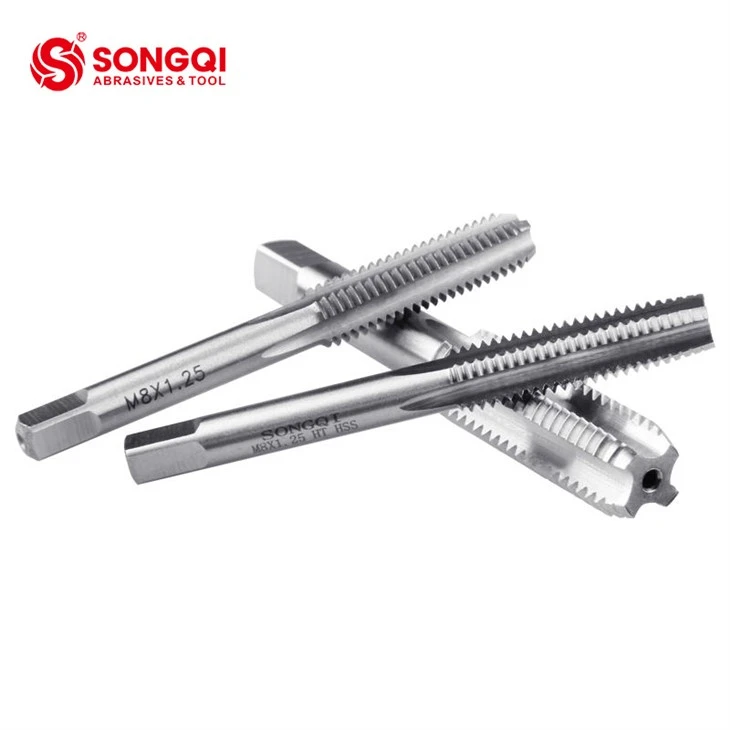
For suitable applications, M2 straight-fluted machine taps and other machine taps can be used to create internal threads after the hole has been prepared.
However, the tap size, drill diameter, thread specification, and tapping method should always be selected according to the actual application rather than simply matching the hole saw diameter.
10. Brass Hardness Can Vary
Not all brass behaves exactly the same during cutting.
Different brass alloys can have different levels of hardness, strength, and machinability. Material condition and thickness can also affect cutting performance.
If a particular brass alloy is more difficult to machine than expected, adjustments may be needed to:
Cutting speed
Feed pressure
Lubrication
Hole saw type
Tooth geometry
Tool diameter
For large-volume production, testing the selected hole saw on the actual brass material before full-scale production can help determine the most suitable cutting parameters.
Which Hole Saw Is Best for Brass?
There is no single hole saw that is best for every brass application.
| Hole Saw Type | Suitable Applications | Main Advantage |
|---|---|---|
| HSS Hole Saw | General brass cutting | Cost-effective and versatile |
| HSS Cobalt Hole Saw | Repeated or demanding metal cutting | Improved heat and wear resistance |
| TCT Hole Saw | Heavy-duty and high-wear applications | High wear resistance and cutting durability |
| TCT 25 mm Cutting Depth Hole Saw | Thicker brass materials | Greater cutting depth |
The best choice depends on the brass alloy, thickness, hole diameter, cutting frequency, machine, and required tool life.
Conclusion
A hole saw can definitely be used to cut brass, but choosing the correct tool and operating it properly is essential for achieving good results.
For general applications, an HSS hole saw can provide a practical and economical solution. For more demanding or repeated cutting, an HSS cobalt hole saw may offer improved durability. For applications requiring higher wear resistance and longer tool life, a TCT hole saw can be considered.
The key factors are:
Right Hole Saw + Correct Speed + Stable Workpiece + Controlled Feed + Proper Lubrication + Good Cutting Technique
If you are unsure which hole saw is suitable for your brass application, provide us with the brass alloy, material thickness, required hole diameter, machine type, and expected cutting volume.
As an experienced hole saw manufacturer, we can recommend a suitable HSS, HSS cobalt, or TCT hole saw and provide customized specifications, packaging, and private-label solutions.
Contact us to discuss your hole saw requirements and find the right solution for your application.

References:
- "The Metalworker's Handbook"
- Various industry publications on hole saws and metal cutting