

How to Maintain HSS Threading Dies and Extend Their Service Life
High-Speed Steel (HSS) threading dies are widely used for producing and repairing external threads in manufacturing, automotive, machinery, construction, and maintenance applications.
Because threading dies are exposed to friction, cutting heat, chips, and moisture during operation, proper maintenance is essential for maintaining thread accuracy and extending tool life.
With the right cleaning, lubrication, storage, and operating practices, users can reduce premature wear and get more consistent performance from their HSS dies.
1. Clean the HSS Dies After Each Use
Regular cleaning is one of the simplest ways to extend the service life of an HSS threading die.
After each operation, remove:
Metal chips
Cutting debris
Coolant residue
Dust and other contaminants
A soft brush or compressed air can be used to remove debris from the cutting flutes and threaded areas.
For more stubborn contamination, an appropriate cleaning solvent can be used. After cleaning, make sure the die is completely dry before storage.
Avoid using abrasive tools or aggressive cleaning methods that may damage the cutting edges.
2. Use the Correct Cutting Lubricant
Proper lubrication is particularly important when cutting external threads in metal.
A suitable cutting oil can help:
Reduce friction
Control cutting temperature
Improve chip evacuation
Reduce wear on the cutting edges
Improve thread surface quality
The lubricant should be selected according to the workpiece material and cutting application.
For example, stainless steel and other difficult-to-machine materials generally require more effective lubrication than softer materials.
3. Avoid Excessive Cutting Pressure
HSS threading dies are designed to remove material gradually through their cutting edges.
Applying excessive force can cause:
Cutting-edge damage
Chipping
Excessive heat
Premature tool wear
Poor thread accuracy
Allow the die to cut at a controlled rate instead of forcing it through the workpiece.
If the die suddenly becomes difficult to turn, stop the operation and check the thread alignment, workpiece diameter, lubrication, and cutting conditions.
4. Select the Correct Pre-Machined Diameter
The diameter of the workpiece should be appropriate for the thread being produced.
If the workpiece is too large, the die must remove excessive material, increasing cutting resistance and tool wear.
If it is too small, the resulting thread may not achieve the required thread profile or strength.
Therefore, always check the recommended pre-machining diameter before starting the threading operation.
5. Keep the Die Properly Aligned
Correct alignment is essential for producing accurate external threads.
An improperly aligned die may cause:
Uneven thread profiles
Tapered threads
Damaged cutting edges
Increased cutting resistance
Use a suitable die holder and make sure the die is perpendicular to the workpiece before starting the threading operation.
6. Inspect the Cutting Edges Regularly
Regular inspection can help identify wear before it affects thread quality.
Check for:
Dull cutting edges
Chipped teeth
Cracks
Rust
Abnormal wear
Damaged thread profiles
If the cutting edges are significantly worn or damaged, replacing the die is usually more practical than continuing to use it.
7. Protect HSS Dies Against Rust
HSS is highly wear-resistant, but it is not completely corrosion-proof.
After cleaning and drying the die, apply a light layer of rust-preventive oil when appropriate.
For long-term storage:
Keep the dies dry
Avoid humid environments
Use protective packaging
Store individual dies separately to prevent edge damage
Proper storage is especially important for tools that are not used frequently.
8. Use the Right Die for the Right Material
Different workpiece materials create different levels of cutting resistance.
HSS dies are suitable for many general-purpose threading applications, while cobalt-alloy HSS or other specialized cutting tools may be preferred for more demanding materials.
Before selecting a die, consider:
Workpiece material
Thread standard
Thread diameter
Thread pitch
Production volume
Required thread accuracy
Choosing the correct die can significantly reduce unnecessary wear.
How to Extend HSS Die Life
The following checklist can help users maximize tool life:
| Maintenance Practice | Benefit |
|---|---|
| Clean after use | Prevents debris buildup |
| Use proper cutting oil | Reduces friction and heat |
| Maintain correct alignment | Improves thread accuracy |
| Control cutting pressure | Reduces edge damage |
| Check workpiece diameter | Reduces cutting load |
| Inspect regularly | Identifies wear early |
| Apply rust protection | Prevents corrosion |
| Store properly | Protects cutting edges |
Why Choose High-Quality HSS Dies?
The service life of a threading die depends not only on maintenance but also on the quality of the tool itself.
A well-manufactured HSS die should provide:
Consistent hardness
Accurate thread geometry
Sharp and uniform cutting edges
Good wear resistance
Stable dimensional accuracy
For professional users and distributors, consistent manufacturing quality is particularly important because it helps maintain stable threading performance across different production batches.
Conclusion
Proper maintenance can significantly extend the working life of HSS threading dies while maintaining consistent thread quality.
The most important practices include regular cleaning, proper lubrication, correct alignment, controlled cutting pressure, regular inspection, and rust prevention.
However, maintenance is only one part of tool performance. Selecting the correct HSS die for the workpiece material and threading application is equally important.
As a professional cutting-tool manufacturer, SONGQI provides HSS threading dies and other machining tools for distributors, workshops, manufacturers, and industrial users.
We also support OEM customization, bulk orders, and customized cutting-tool solutions according to different application requirements.

Cleaning
Cleaning should be carried out carefully to protect the cutting edges and surface of the HSS threading die.
After each use, remove metal chips, cutting fluid residue, and other contaminants from the die. A soft brush or compressed air can be used to clean the cutting flutes and threaded areas.
Avoid using abrasive tools or metal brushes that could damage the cutting edges or surface of the die.
Particular attention should be paid to the cutting flutes, where chips can accumulate and interfere with proper chip evacuation and threading performance.
Lubrication
Proper lubrication is essential for extending the service life of HSS threading dies and maintaining consistent thread quality.
A suitable cutting oil or threading lubricant can help:
Reduce friction
Control cutting temperature
Improve chip evacuation
Reduce cutting-edge wear
Improve thread surface quality
The appropriate lubricant depends on the workpiece material and threading application.
For example, more effective cutting lubrication may be required when threading stainless steel or other difficult-to-machine materials.
Apply the lubricant evenly to the cutting area and follow the lubricant manufacturer's recommendations. Insufficient lubrication can increase friction and heat, while inappropriate application may interfere with chip evacuation or affect the working environment.
Storage
Proper storage helps protect HSS threading dies from corrosion, impact, and accidental damage when they are not in use.
Store the dies in a:
Clean environment
Dry environment
Low-humidity location
Protected tool cabinet or case
Avoid exposing the dies to moisture, dust, or corrosive substances.
For long-term storage, applying a thin layer of rust-preventive oil can provide additional corrosion protection. Before using the die again, remove excess oil and inspect the cutting edges carefully.
Individual storage compartments or protective cases are recommended to prevent the dies from contacting each other and damaging their cutting edges.
Inspection and Reconditioning
Regular inspection can help identify wear before it seriously affects threading performance.
Check the die for:
Dull cutting edges
Chipped teeth
Cracks
Corrosion
Abnormal wear
Damaged thread profiles
If the cutting edges become significantly worn or damaged, replacing the die is often more practical than attempting to restore it.
For specialized or reusable HSS threading dies, professional reconditioning may be possible. Any reconditioning should be performed by a qualified specialist according to the original cutting geometry and manufacturer's specifications.
Do not use a cracked or severely damaged threading die.
Proper Handling and Usage
Correct operating practices are just as important as maintenance.
When using an HSS threading die, make sure that:
The workpiece diameter is suitable for the required thread
The die is correctly aligned with the workpiece
Appropriate cutting speed is used
Sufficient cutting lubricant is applied
The die is not subjected to excessive force
Incorrect alignment can cause uneven loading on the cutting teeth, resulting in poor thread quality and premature tool wear.
Do not force the die through a workpiece that is outside its recommended application range. Excessive resistance may indicate an incorrect workpiece diameter, insufficient lubrication, poor alignment, or an unsuitable cutting tool.
When installing or removing the die, use a suitable die holder and avoid striking or dropping the tool.
How to Extend the Service Life of HSS Threading Dies
A few simple practices can significantly improve tool life:
| Maintenance Practice | Main Benefit |
|---|---|
| Clean after use | Removes chips and contaminants |
| Use proper cutting lubricant | Reduces friction and heat |
| Check alignment | Prevents uneven tooth loading |
| Inspect cutting edges | Detects wear early |
| Protect against rust | Reduces corrosion |
| Store individually | Prevents edge damage |
| Use correct workpiece diameter | Reduces cutting resistance |
| Avoid excessive force | Prevents premature failure |
Related Cutting Tools
In addition to HSS threading dies, SONGQI provides a range of complementary cutting tools for machining and metalworking applications.
M2 Straight Fluted Machine Taps
Our M2 Straight Fluted Machine Taps are designed for general-purpose internal threading applications.
The straight flute design provides reliable cutting performance and is suitable for a variety of workpiece materials.
Spiral Flute Combination Drill
The Spiral Flute Combination Drill combines drilling and countersinking operations into a single tool, helping users reduce tool changes and improve machining efficiency.
Its spiral flute design also helps improve chip evacuation during drilling.
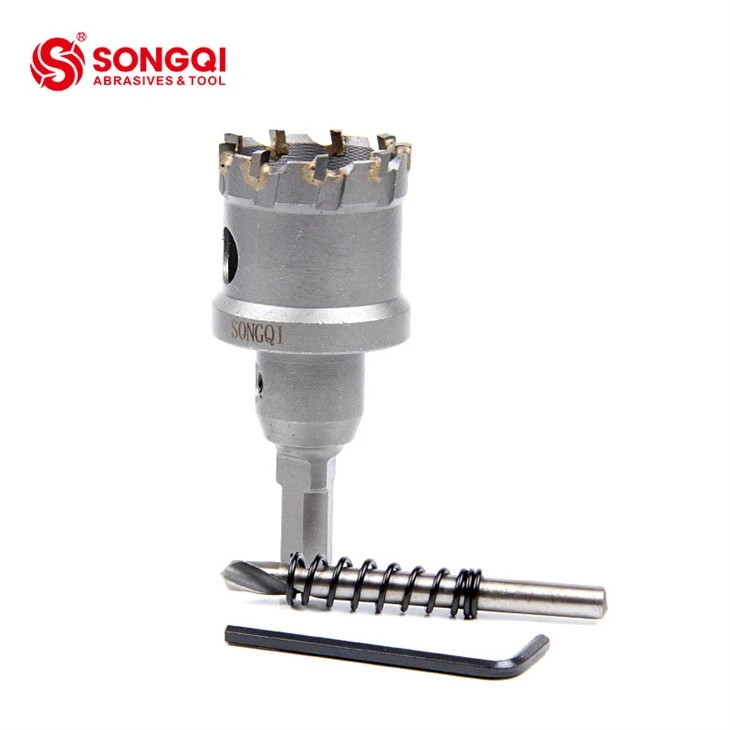
TCT Hole Saw
For applications requiring larger holes in materials such as metal, wood, and other suitable substrates, TCT Hole Saws provide high wear resistance and reliable cutting performance.
With carbide-tipped teeth, they are particularly suitable for applications where longer tool life and efficient cutting are required.
Conclusion
Proper maintenance is essential for maximizing the service life and performance of HSS threading dies.
Regular cleaning, appropriate lubrication, proper storage, routine inspection, correct alignment, and suitable operating conditions can all help reduce premature wear and maintain consistent thread quality.
However, tool maintenance begins with selecting the right die for the application. The correct thread standard, size, material, cutting geometry, and workpiece diameter should always be considered before machining.
As a professional cutting-tool manufacturer, SONGQI supplies HSS threading dies and a wide range of complementary machining tools for distributors, workshops, manufacturers, and industrial users.
We support OEM customization, bulk orders, and customized cutting-tool solutions for different market requirements.
Contact us to discuss your HSS threading die requirements and find the right solution for your application.