

What Is the Corrosion Resistance of a TCT Hole Saw?
As a professional TCT hole saw manufacturer, we understand that corrosion resistance is an important consideration for customers who use cutting tools in humid, outdoor, or demanding working environments.
However, it is important to distinguish between wear resistance and corrosion resistance.
TCT (Tungsten Carbide Tipped) hole saws are primarily designed to provide high hardness, excellent wear resistance, and efficient cutting performance. Their resistance to corrosion, however, depends largely on the steel body, surface treatment, coating, storage conditions, and working environment.
Understanding Corrosion Resistance
Corrosion occurs when a metal reacts with moisture, oxygen, chemicals, or other environmental factors.
For a TCT hole saw, different components may have different levels of corrosion resistance.
The tungsten carbide tips provide excellent hardness and wear resistance, while the steel body is generally more susceptible to rust and corrosion.
Therefore, the corrosion resistance of a complete TCT hole saw should be evaluated based on the entire tool rather than the carbide teeth alone.
A well-protected hole saw can maintain its appearance, structural integrity, and cutting performance for a longer period, particularly when it is properly stored and maintained.
Factors Affecting the Corrosion Resistance of TCT Hole Saws
1. Steel Body Material
The steel used for the hole saw body has a direct influence on its resistance to corrosion.
For conventional TCT hole saws, the body is generally manufactured from suitable carbon steel or alloy steel selected for its combination of:
Strength
Toughness
Machinability
Dimensional stability
Because these steels are not inherently rust-proof, additional surface protection may be required.
For applications involving high humidity, water exposure, or corrosive environments, customers should pay particular attention to the surface treatment and storage requirements of the tool.
2. Surface Treatment and Coating
Surface treatment is one of the most important factors affecting corrosion resistance.
Depending on the product design, manufacturers may use different surface treatments or protective coatings to reduce exposure of the steel body to moisture and oxygen.
A suitable coating can help:
Reduce surface oxidation
Improve corrosion resistance
Maintain appearance
Extend storage life
When selecting a TCT hole saw for long-term storage or humid environments, it is worth checking whether the product has been treated with an appropriate anti-corrosion coating or protective oil.
3. Working Environment
The environment in which the hole saw is used has a significant effect on corrosion.
For example, tools used in:
Outdoor construction
Plumbing applications
High-humidity workshops
Coastal areas
Chemical processing environments
may be exposed to more moisture or corrosive substances than tools used in a dry indoor workshop.
Therefore, even a well-protected TCT hole saw should not be considered completely corrosion-proof unless the manufacturer specifically confirms that it is designed for such conditions.
4. Storage Conditions
Proper storage can significantly reduce the risk of rust.
After use:
Remove chips and debris.
Clean off cutting fluid and contaminants.
Dry the hole saw thoroughly.
Apply a suitable rust-preventive oil when necessary.
Store the tool in a dry and ventilated location.
Avoid leaving TCT hole saws exposed to water or high humidity for extended periods.
Does TCT Improve Corrosion Resistance?
Not directly.
The main advantages of tungsten carbide are:
High hardness
Excellent wear resistance
Good cutting performance
Long service life in demanding applications
The carbide teeth themselves are highly resistant to wear, but the steel body remains the primary component that requires corrosion protection.
Therefore:
TCT improves cutting durability, while proper steel selection and surface protection determine much of the hole saw's corrosion resistance.
This distinction is important when comparing different TCT hole saws.
How to Improve the Corrosion Resistance of a TCT Hole Saw
For longer service life, users should follow several basic practices:
Keep the tool dry
Moisture is one of the main causes of rust. Always dry the hole saw after cleaning.
Apply rust-preventive oil
For long-term storage, a thin protective oil film can help reduce oxidation.
Avoid prolonged exposure to chemicals
Acids, salts, and other corrosive substances can accelerate corrosion of the steel body.
Store properly
Keep the hole saw in a dry tool case or cabinet and avoid direct contact with wet surfaces.
Inspect regularly
Check the steel body, teeth, and arbor for signs of rust, coating damage, or other abnormalities.
How Good Corrosion Resistance Affects Tool Life
Corrosion can affect more than the appearance of a hole saw.
Severe corrosion may:
Weaken the steel body
Damage cutting components
Affect the arbor connection
Increase surface roughness
Reduce overall service life
For professional users, proper corrosion protection therefore contributes to more consistent tool performance and lower replacement costs.
Conclusion
A TCT hole saw offers excellent hardness, wear resistance, and cutting performance, but TCT does not automatically mean corrosion-proof.
The overall corrosion resistance of a TCT hole saw depends mainly on:
Steel body material
Surface treatment
Protective coating
Working environment
Storage conditions
Maintenance practices
For users working in humid or demanding environments, selecting a hole saw with appropriate surface protection and following proper maintenance procedures can significantly improve service life.
As a professional TCT hole saw manufacturer, SONGQI provides different hole saw solutions for construction, metalworking, plumbing, electrical installation, and industrial applications.
We can also support OEM customization, different sizes, tooth configurations, surface treatments, and bulk orders according to customer requirements.
Contact us to discuss your application and select the right TCT hole saw for your working environment.

Coatings
Surface Coatings and Corrosion Protection
Surface treatment can play an important role in protecting the steel body of a TCT hole saw from oxidation and corrosion.
Depending on the product design and application requirements, different surface treatments may be used.
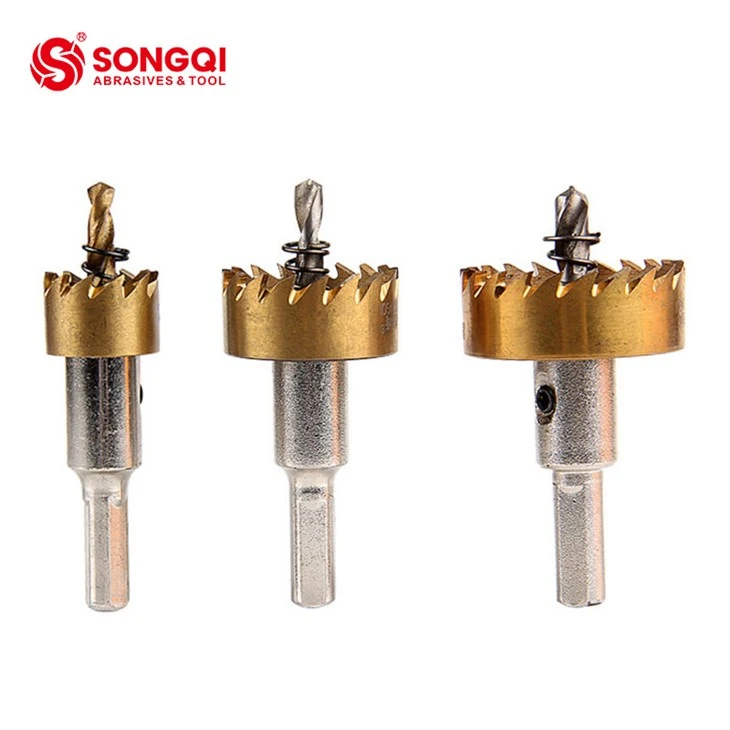
Titanium Nitride (TiN) Coating
TiN is a hard surface coating known for its high surface hardness, wear resistance, and low friction characteristics.
When properly applied to a suitable substrate, TiN can provide an additional protective barrier against environmental exposure while improving surface durability.
However, TiN coating should be selected according to the specific application and tool construction. It should not be considered a guarantee that the entire hole saw is corrosion-proof.
Black Oxide Treatment
Black oxide is a chemical conversion treatment commonly used on steel components.
It provides a degree of surface protection and can also improve the surface appearance and lubricity of the tool.
For improved long-term corrosion protection, black oxide components are often combined with a suitable rust-preventive oil or post-treatment.
The actual corrosion resistance depends on the complete surface-treatment system, storage conditions, and working environment.
Operating Conditions
The working environment has a significant influence on the corrosion resistance and service life of a TCT hole saw.
Tools used in:
High-humidity environments
Outdoor construction sites
Coastal areas
Plumbing applications
Chemical processing environments
may experience greater exposure to moisture, salt, or corrosive substances.
Cutting fluids, metal chips, dust, and chemical residues can also remain on the tool surface after use. If these contaminants are not removed, they may accelerate corrosion of the steel body.
For this reason, cleaning and drying the hole saw after use is particularly important when working in demanding environments.
Why Is Corrosion Resistance Important?
1. Longer Service Life
Corrosion can gradually affect the steel body and other exposed metal components of a hole saw.
Severe corrosion may result in:
Surface deterioration
Reduced structural integrity
Damage around tooth attachment areas
Premature tool replacement
Proper corrosion protection can therefore help maintain the tool's condition and extend its usable life.
2. Consistent Cutting Performance
Corrosion does not necessarily make the carbide teeth themselves dull, but corrosion on the steel body or around the tooth attachment areas can affect the overall condition of the tool.
Keeping the hole saw clean and corrosion-free helps maintain:
Stable tooth positioning
Proper tool alignment
Smooth operation
Consistent cutting performance
3. Tool Safety
Severe corrosion may compromise the structural integrity of the tool, particularly around the body, arbor, or tooth attachment areas.
Regular inspection is therefore important. A hole saw showing severe corrosion, cracks, loose teeth, or other structural damage should not be used until it has been properly evaluated or replaced.
Our TCT Hole Saw Solutions
SONGQI TCT hole saws are designed for professional cutting applications where high wear resistance and efficient material removal are required.
Our TCT hole saw solutions feature:
Tungsten carbide-tipped cutting teeth
Durable steel bodies
Consistent tooth positioning
Multiple diameter options
Suitable surface protection for different applications
For customers working in humid or demanding environments, we can discuss appropriate surface treatment and packaging requirements according to the application and storage conditions.
Our product range also includes HSS cobalt hole saws, machine taps, and other power-tool accessories, providing customers with a broader range of cutting and machining solutions.
How to Protect Your TCT Hole Saw from Corrosion
For longer storage and service life:
Clean the tool after use.
Remove metal chips and cutting residues.
Dry the steel body thoroughly.
Apply rust-preventive oil when appropriate.
Store the tool in a dry environment.
Avoid prolonged exposure to moisture and corrosive chemicals.
Inspect the tool regularly before use.
These simple practices can significantly reduce the risk of corrosion and help maintain the condition of the tool.
Contact Us for TCT Hole Saw Solutions
If you are looking for reliable TCT hole saws for professional or industrial applications, SONGQI can provide different sizes, tooth configurations, and product specifications according to your requirements.
We also support:
OEM customization
Bulk purchasing
Private labeling
Customized packaging
Different surface-treatment options
Contact us to discuss your application, target market, and hole saw requirements.