

HSS Die Production Process: From Design to Finished Product
When customers are looking for reliable HSS dies, one of the most common questions we receive is: How long does it take to manufacture an HSS die, and what does the production process involve?
The answer depends on the die design, material, specifications, quantity, and required precision. However, a typical HSS die production cycle involves several carefully controlled stages, from engineering design and material selection to precision machining, heat treatment, grinding, inspection, and final delivery.
As an experienced HSS die manufacturer, we understand that every step of the manufacturing process can have a direct impact on the accuracy, durability, and service life of the finished die.
Let's take a closer look at how HSS dies are manufactured.
1. Design and Engineering
The production process begins with the design and engineering stage.
Our engineers review the customer's requirements, including the die dimensions, thread or forming profile, application, material to be processed, tolerance requirements, and expected service life. Based on these specifications, the engineering team develops the appropriate die design.
Computer-aided design (CAD) software is commonly used to create detailed 2D drawings and 3D models. This allows engineers to evaluate critical dimensions, working profiles, tolerances, and potential interference before manufacturing begins.
For customized HSS dies, this stage is particularly important. A well-designed die provides the foundation for dimensional accuracy, smooth operation, and consistent production performance.
Before moving into production, the design and technical specifications are carefully reviewed and confirmed.
2. HSS Material Selection
Once the design has been finalized, the next step is selecting the appropriate HSS material.
High-speed steel (HSS) is widely used for high-performance dies because of its excellent hardness, wear resistance, toughness, and ability to maintain performance under demanding working conditions.
Different HSS grades can provide different combinations of hardness, toughness, wear resistance, and thermal performance. Therefore, material selection should be based on the specific application rather than simply choosing the hardest available grade.
We source HSS materials from qualified and reliable suppliers and inspect the incoming material according to established quality requirements.
Important considerations include chemical composition, material grade, hardness, metallurgical condition, and overall material consistency.
Alloying elements such as chromium, tungsten, molybdenum, vanadium, and cobalt can significantly influence the properties and performance of HSS. Proper material selection helps provide a stable foundation for subsequent machining and heat treatment.
3. Material Preparation
After material selection and incoming inspection, the HSS material is prepared for machining.
The raw material is cut into the required dimensions according to the production drawing. Precision cutting equipment is used to ensure dimensional consistency and minimize unnecessary material loss.
Depending on the material condition and manufacturing process, pre-machining or stress-relief treatment may also be carried out before precision machining.
Proper material preparation is important because internal stresses or dimensional instability can affect the accuracy of subsequent machining and heat treatment processes.
Before proceeding to the next stage, the prepared blanks are inspected to ensure that their dimensions and material condition meet the required specifications.
4. Precision Machining
Machining is one of the most important stages in HSS die manufacturing. At this stage, the prepared HSS blank is gradually transformed into the required die geometry.
Depending on the design, various machining processes may be used, including turning, milling, drilling, grinding, and other precision machining operations.
Turning is commonly used to produce cylindrical surfaces and rotational features.
Milling is used to create complex profiles, grooves, slots, and other geometric features.
Drilling is used to produce holes or internal features according to the engineering drawings.
Grinding is particularly important for achieving high dimensional accuracy, tight tolerances, and the required surface finish.
For precision HSS dies, machining parameters must be carefully controlled. Cutting speed, feed rate, tool condition, coolant, and machining sequence can all influence dimensional accuracy and surface quality.
Our operators and technicians monitor the machining process closely to ensure that critical dimensions remain within the specified tolerances.
5. Heat Treatment
Heat treatment is a critical stage in determining the final mechanical properties of an HSS die.
A properly designed heat treatment process can significantly improve hardness, wear resistance, dimensional stability, and overall service life.
Depending on the HSS grade and product requirements, the heat treatment process may include preheating, austenitizing, quenching, tempering, and other controlled thermal processes.
The heating temperature, holding time, cooling rate, and tempering conditions must be carefully controlled. Improper heat treatment can result in excessive hardness, insufficient hardness, distortion, cracking, or reduced toughness.
After heat treatment, hardness and dimensional inspections are performed to verify that the die meets the required specifications.
6. Precision Grinding and Finishing
Following heat treatment, precision grinding and finishing are carried out to achieve the final dimensions and surface quality.
Grinding is especially important for HSS dies because it allows manufacturers to achieve tighter tolerances than conventional machining processes.
Critical working surfaces and profiles are carefully ground according to the engineering specifications. Surface finish is also controlled to ensure smooth contact and stable performance during operation.
For applications with particularly demanding accuracy requirements, additional finishing processes may be used to achieve the required dimensional precision and surface condition.
7. Quality Inspection
Quality inspection is performed throughout the manufacturing process rather than only at the final stage.
During production, key dimensions and process parameters are inspected to identify potential deviations at an early stage.
At the final inspection stage, the finished HSS dies are checked against the approved drawings and technical specifications. Depending on the product requirements, inspection items may include:
Dimensional accuracy
Thread or forming profile accuracy
Hardness
Surface finish
Concentricity
Geometric tolerances
Visual appearance
Overall workmanship
Precision measuring instruments and inspection equipment are used to verify critical dimensions and ensure consistent product quality.
Only products that pass the required inspections are approved for final packaging and shipment.
8. Packaging and Delivery
After final inspection, qualified HSS dies are carefully cleaned, protected, and packaged to prevent damage, corrosion, or contamination during storage and transportation.
For export orders, packaging can be customized according to customer requirements, including individual packaging, labeling, barcodes, cartons, and outer packaging.
The completed products are then prepared for shipment according to the agreed delivery schedule.
How Long Does It Take to Manufacture an HSS Die?
The production lead time for an HSS die depends on several factors, including:
Die design and complexity
Material grade
Required dimensional tolerance
Heat treatment requirements
Surface finish requirements
Order quantity
Customization requirements
Current production capacity
For standard HSS dies, production can generally be completed within a relatively short cycle. Customized or highly precision dies may require additional engineering, machining, heat treatment, and inspection time.
Rather than focusing only on production speed, we believe that stable quality, dimensional accuracy, and consistent performance are equally important.
Conclusion
The production of a high-quality HSS die is not simply a matter of machining a piece of high-speed steel into a required shape. It is a systematic process involving engineering design, material selection, precision machining, heat treatment, grinding, inspection, and quality control.
Every stage contributes to the final performance and service life of the die.
As an HSS die manufacturer, we are committed to maintaining strict process control and continuously improving our manufacturing capabilities to provide customers with reliable, precise, and durable HSS dies for a wide range of industrial applications.
Looking for a reliable HSS die manufacturer or customized HSS die solution? Contact us to discuss your requirements.

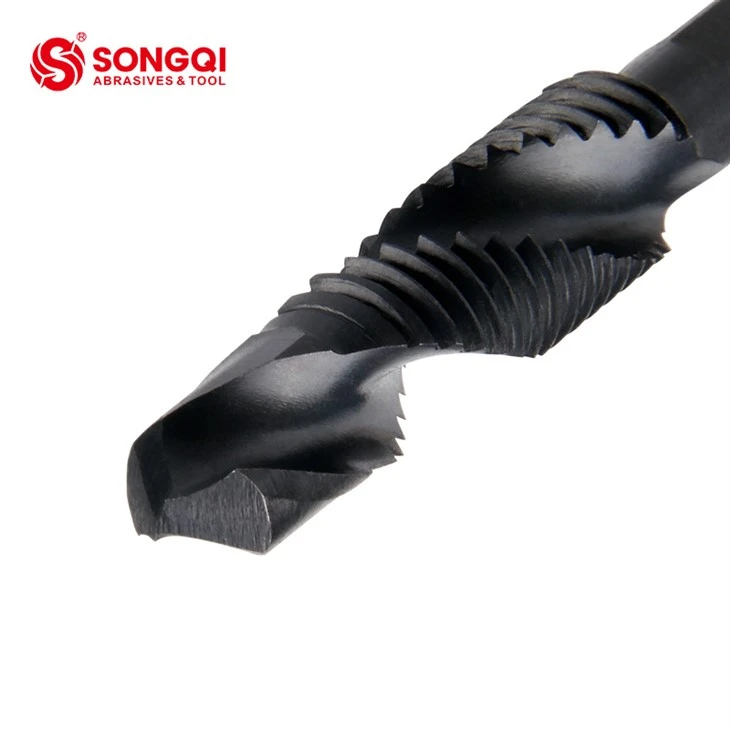
4. Precision Machining
Machining is one of the most important stages in HSS die manufacturing. At this stage, the prepared HSS blank is gradually transformed into the required die geometry.
Depending on the design, various machining processes may be used, including turning, milling, drilling, grinding, and other precision machining operations.
For example, when manufacturing a die or tooling component used for a TCT concrete hole saw cutter set, the working profile and critical dimensions must be machined according to the specific hole saw design. Dimensional accuracy is particularly important because even a small deviation in a critical feature can affect the forming accuracy, assembly, cutting performance, or service life of the final product.
For customized HSS dies, we carefully control machining tolerances and inspect critical dimensions throughout the process to ensure that the finished tooling meets the approved technical drawings and customer requirements.
5. Heat Treatment
Heat treatment is another critical stage in HSS die manufacturing. Its purpose is to develop the required combination of hardness, wear resistance, toughness, and dimensional stability.
The exact heat treatment process depends on the HSS grade, die design, required properties, and application. A typical process may include controlled preheating, austenitizing, quenching, and multiple tempering cycles.
During quenching, the heated material is cooled under carefully controlled conditions to develop the required hardened structure. Tempering is then carried out to reduce excessive brittleness and achieve the appropriate balance between hardness and toughness.
Heat treatment parameters such as heating temperature, holding time, atmosphere, cooling conditions, and tempering temperature must be precisely controlled. Even relatively small deviations can affect the final hardness, dimensional stability, toughness, and service life of the HSS die.
After heat treatment, the dies are inspected to verify that the required hardness and dimensional specifications have been achieved.
6. Surface Treatment and Finishing
Depending on the application and performance requirements, an HSS die may undergo additional surface treatment or finishing processes after heat treatment.
Common options may include nitriding, PVD coating, polishing, or precision grinding.
Nitriding can increase surface hardness and improve wear resistance, making it suitable for applications where the working surface is exposed to high friction and repeated contact.
PVD coatings, such as titanium nitride (TiN) and other specialized coating systems, may be applied to improve surface hardness, reduce friction, and enhance wear resistance. The appropriate coating depends on the application, workpiece material, operating conditions, and required service life.
Polishing and precision grinding are used to achieve the required surface finish and dimensional accuracy. A properly finished working surface can help reduce friction, improve material flow or forming performance, and minimize the risk of sticking or galling in suitable applications.
Not every HSS die requires the same surface treatment. We select the appropriate finishing process based on the actual working conditions and customer requirements.
7. Quality Inspection
Quality inspection is performed throughout the production cycle rather than only after the die has been completed.
During machining, in-process inspections are carried out to verify critical dimensions and detect potential deviations at an early stage. After heat treatment, hardness and dimensional stability are checked to ensure that the required properties have been achieved.
The final inspection may include:
Dimensional inspection
Profile and geometry inspection
Hardness testing
Surface finish inspection
Concentricity and runout inspection
Visual inspection
Functional inspection, where applicable
For high-precision tooling, coordinate measuring machines (CMMs) and other precision measuring equipment can be used to verify critical dimensions and geometric tolerances.
Hardness testers are used to verify the hardness of the HSS material after heat treatment.
If a deviation is identified, the product is evaluated according to the severity and type of nonconformity. Where technically feasible, the die may undergo rework or corrective processing. Products that cannot meet the required specifications are rejected.
This multi-stage inspection system helps us maintain consistent quality and reduce the risk of defects reaching the customer.
8. Final Assembly and Packaging
After the HSS die passes all required inspections, it proceeds to final assembly and preparation for shipment.
If the tooling consists of multiple components, the individual parts are assembled according to the approved design and checked for proper fit and function.
Before packaging, the finished dies are cleaned and protected against contamination, moisture, and potential mechanical damage during transportation.
We use appropriate protective packaging materials based on the product dimensions, weight, geometry, and transportation method. Customized labels, product identification, and packaging requirements can also be provided according to customer specifications.
Our goal is to ensure that the HSS dies arrive at the customer's facility in a safe, clean, and ready-to-use condition.
Overall Production Lead Time
The production lead time of an HSS die varies depending on several factors, including:
Design complexity
Material grade and availability
Dimensional tolerance requirements
Machining requirements
Heat treatment process
Surface treatment or coating
Order quantity
Inspection requirements
Customization level
For relatively simple standard tooling, the production cycle may be completed within several days to approximately one week, depending on production scheduling and material availability.
More complex or highly customized HSS dies may require several weeks because of additional engineering, precision machining, heat treatment, surface finishing, and inspection requirements.
For example, a relatively straightforward tooling application for a Hex Shank Phillips PH2 Magnetic Screwdriver Power Bit may require a shorter manufacturing cycle, while tooling designed for a forming machine tap or other complex forming application may require additional engineering and precision processing.
Therefore, rather than providing a fixed lead time for every product, we evaluate each project individually based on its technical requirements and production complexity.
Conclusion
The production of a high-quality HSS die is a systematic process that combines engineering expertise, material science, precision machining, heat treatment, surface finishing, and strict quality control.
From the initial design and material selection to precision machining, heat treatment, inspection, and final packaging, every stage can influence the accuracy, durability, and service life of the finished die.
As an experienced HSS die manufacturer, we are committed to maintaining consistent process control and continuously improving our manufacturing capabilities to provide reliable tooling solutions for different industrial applications.
Whether you are looking for HSS tooling for a spiral flute combination drill, HSS hole saw, threading application, forming machine tap, or other specialized applications, we can evaluate your technical requirements and provide a suitable tooling solution.
Contact us to discuss your HSS die requirements, drawings, specifications, or customization needs. Our team is ready to help you find the right solution for your application.
References
ASM Handbook, Volume 4: Heat Treating, ASM International
Machinery's Handbook, Industrial Press
Relevant HSS material and heat-treatment technical data
Applicable customer specifications and tooling requirements