

When sourcing tools for metalworking, one of the most common questions we get here at our hole saw for sale store is: Can a hole saw for sale be used on aluminum? It’s a totally valid concern—aluminum is a tricky material. It’s soft, has a tendency to gum up cutting edges, and generates a lot of heat if you don’t use the right tools and technique. As someone who’s worked with power tool accessories for over a decade, I’ve seen both great successes and frustrating failures when it comes to cutting aluminum with hole saws. Today, I’m breaking down the science behind this, sharing what works, what doesn’t, and how to make sure your hole saw job on aluminum goes smoothly.
First, let’s get one thing straight: Yes, a hole saw for sale absolutely can be used on aluminum. But not all hole saws are created equal for this task. Aluminum’s unique properties mean you need specific features in a hole saw to cut it effectively, without wasting time, wearing out tools prematurely, or ending up with a lopsided, gummy hole. Let’s start with why aluminum is different from other metals like steel or stainless steel. Aluminum has a low melting point (around 660°C, compared to steel’s 1538°C) and a high tendency to adhere to cutting edges. When you cut aluminum, tiny shavings can weld themselves to the teeth of a regular hole saw, creating something called “built-up edge” (BUE). This BUE not only dulls the teeth fast but also causes the hole to become rough, and it can even make the hole saw bind mid-cut. That’s why using the wrong hole saw on aluminum is a recipe for frustration—but with the right tool, it’s straightforward.
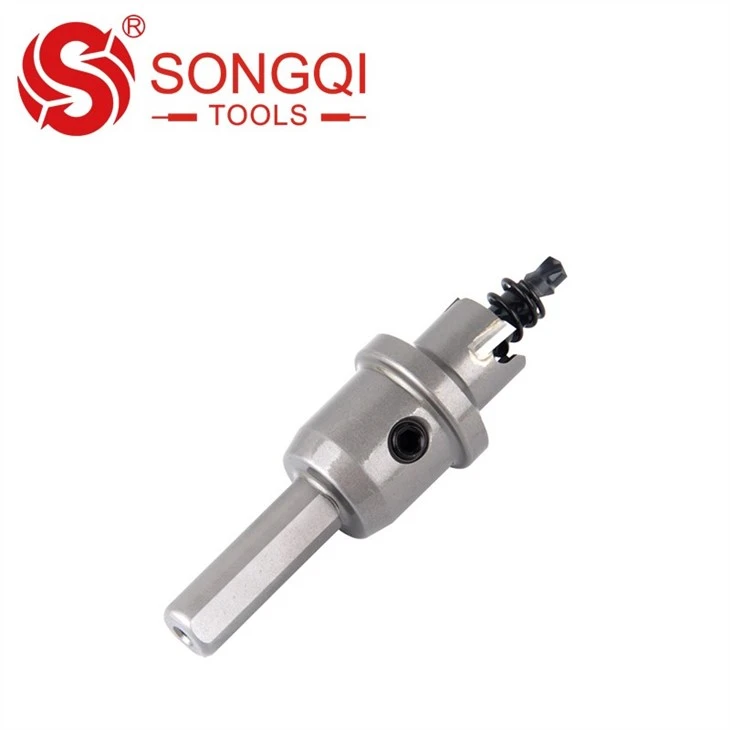
So, what kind of hole saw should you look for when cutting aluminum? Let’s talk about materials first. High-Speed Steel (HSS) is a common choice, but not all HSS is equal. HSS cobalt is a step above standard HSS because it has higher heat resistance and edge retention. We sell a HSS Cobalt Hole Saw Drill Bit that’s perfect for aluminum. The cobalt content (usually 5-8%) gives these bits the hardness to stand up to the heat generated when cutting soft, gummy metals, and their sharp teeth don’t dull as quickly as regular HSS when aluminum shavings start to stick. Another option is Tungsten Carbide Tipped (TCT) hole saws. TCT is even harder than HSS, making it ideal for heavy-duty cutting jobs. Our SONGQI TCT Carbide Hole Saw Set is designed to handle not just aluminum but also other tough metals, and the carbide tips are less prone to BUE because they’re so hard—aluminum shavings don’t weld to them as easily as they do to steel or HSS edges. It’s worth noting that for very thin aluminum (like sheet aluminum under 1mm), a TCT hole saw might be overkill, but for thicker aluminum (1mm to 10mm or more), TCT is a great pick.
Next, let’s talk about design features that matter for aluminum cutting. Flute design is a big one. The flutes on a hole saw are the grooves that carry away cut shavings. If your flutes are too small or too shallow, aluminum shavings can get stuck, leading to binding. That’s why spiral flutes are a great choice for aluminum. We have a Spiral Flute Combination Drill that’s specifically engineered to pull shavings out of the cut as you drill, preventing clogging and BUE. The spiral design also helps with chip evacuation, which is crucial for soft metals that tend to produce long, stringy shavings. Another feature to look for is tooth geometry. For aluminum, you want hole saws with more teeth per inch (TPI) but smaller tooth pitch? Wait, no—wait, actually, for soft metals, a slightly larger tooth pitch is better because it gives the shavings more room. Wait, let me correct that: When cutting soft, gummy metals, you need a balance between enough teeth for a clean cut and enough space between teeth for shavings to escape. Too few teeth, and you’ll get rough cuts; too many, and shavings can’t clear. The SONGQI TCT set I mentioned earlier has a tooth profile optimized for non-ferrous metals like aluminum, with sharp, well-spaced teeth that minimize BUE. Also, look for hole saws with a pilot bit that’s sharp and rigid. A wobbly pilot bit will cause the hole saw to wander, resulting in an off-center hole, especially on thin aluminum.
Now, let’s get into the best practices for actually using a hole saw on aluminum, because even the best tool won’t work if you don’t use it right. First, speed is everything. Aluminum cuts best at higher speeds than steel. For HSS hole saws, you want to run your drill at around 1500-2500 RPM for aluminum, depending on the thickness. For TCT hole saws, you can go a bit slower—maybe 1000-1800 RPM—since carbide handles heat better, but still faster than you would for steel. Running too slow will make the aluminum gum up the teeth, while running too fast can generate too much heat, which is bad because aluminum melts easily. Another key point: lubrication. Wait, do you need to use lubricant when cutting aluminum with a hole saw? That’s a common question. For thin sheet aluminum, you might not need a lot, but for thicker pieces, a light lubricant like cutting oil or even WD-40 can help reduce heat and friction, making the cut smoother and extending the life of your hole saw. Be careful not to use too much lubricant, though, as it can make the shavings slippery and harder to clear from the flutes.
Also, when clamping your workpiece, make sure the aluminum is securely held. Aluminum is soft, so if it moves while you’re cutting, you’ll get a lopsided hole, or the hole saw might bind. For thin sheet aluminum, you can even place a piece of scrap wood behind it to support the material and prevent it from bending or tearing as the hole saw breaks through. That’s a pro tip I learned early on—when I first started, I would cut sheet aluminum without support, and I’d end up with a torn edge that I had to grind down, wasting time. Now, I always use a backing scrap for thin materials.
Let’s address some common mistakes people make when using hole saws on aluminum. One big mistake is using a hole saw that’s designed for wood or plastic on aluminum. Wood hole saws have larger teeth with more space between them, which is fine for wood chips, but for aluminum, those large teeth can grab too much material at once, leading to binding. Another mistake is not clearing chips often. Every few seconds when cutting, pull the hole saw out of the cut to let the shavings fall out—don’t just push it through. This is especially important with spiral flute bits like our Spiral Flute Combination Drill, which is designed to pull shavings out, but helping it along will prevent clogs. Also, don’t force the drill. If you’re pushing too hard, that’s a sign that your speed is too low, or your hole saw is dull. Let the tool do the work—applying consistent, light pressure is better than brute force for cutting aluminum.
Wait, let’s talk about specific use cases. If you’re cutting aluminum for plumbing projects (like running copper pipe through aluminum framing) or for electrical work (drilling holes in aluminum panels for outlets), a HSS cobalt hole saw like our HSS Cobalt Hole Saw Drill Bit is perfect. It’s affordable, sharp, and works well for medium-thickness aluminum up to about 6mm. For larger holes (like 50mm or more) in thicker aluminum (10mm or more), our TCT 25mm Cutting Depth Hole Saw is a great option. The 25mm depth means it can handle thicker stock, and the carbide tips will hold up even through multiple cuts in hard aluminum alloys. If you’re doing a lot of hole sawing on aluminum, getting a set like the SONGQI TCT Carbide Hole Saw Set is a smart investment because it gives you multiple sizes with optimized tooth geometry for metal cutting.
I should also mention a related tool that’s helpful after cutting holes in aluminum. Once you’ve cut your hole, you’ll probably need to clean up the edge or tap a thread into it if you’re using a fastener. Our Forming Machine Tap is ideal for tapping aluminum, as it creates threads by forming material rather than cutting it, which reduces the chance of BUE and produces stronger threads in soft metals. It’s a great complement to your hole saw work on aluminum, making the entire project smoother.
Let’s circle back to the original question: Can a hole saw for sale be used on aluminum? The short answer is a resounding yes—but only if you choose the right hole saw and follow the best practices. The key is matching your hole saw to the material and thickness of your aluminum. Soft, thin sheet aluminum works well with HSS cobalt hole saws, while thicker, harder aluminum alloys are better suited for TCT hole saws. And don’t forget about the drill settings: higher speeds, consistent pressure, and chip clearing will make all the difference.
From my experience in this industry, the biggest confusion comes from people assuming all hole saws are the same. If you walk into a hardware store and grab a generic hole saw, it might work once or twice on aluminum, but it’ll gum up fast and not give a clean cut. That’s why it’s worth investing in tools designed specifically for metalworking—like the ones we offer at our hole saw for sale store. We’ve tested all the products we stock on aluminum, steel, stainless steel, and other materials, so we know they perform as advertised.

If you’re working on a project and still unsure which hole saw is right for your aluminum cutting job, don’t hesitate to reach out. We’ve helped hundreds of customers select the right tool, whether they’re a DIYer doing a small home project or a professional contractor working on a commercial build. We don’t just sell hole saws—we share knowledge, because we care about our customers getting the job done right. The last thing we want is for someone to struggle with a hole saw that’s not suited for aluminum, when a simple swap to a TCT or HSS cobalt model would make their work so much easier.
At the end of the day, aluminum is a manageable material for hole saws, as long as you respect its unique properties. The right hole saw will cut through aluminum cleanly, quickly, and without the frustration of BUE or binding. Whether you’re a seasoned pro or just starting out, taking the time to choose the right tool and follow the proper steps will pay off in a high-quality result that saves you time and money in the long run.
If you’re looking to buy hole saws for aluminum or other metalworking projects, we have a range of options tailored to different needs. Our SONGQI TCT Carbide Hole Saw Set, Spiral Flute Combination Drill, TCT 25mm Cutting Depth Hole Saw, HSS Cobalt Hole Saw Drill Bit, and Forming Machine Tap are all designed to make your metal cutting jobs easier and more efficient. Browse our collection to find the right tools for your project, and feel free to connect with us to discuss your specific needs—we’re here to help you choose the best hole saw for your aluminum cutting tasks.
References
- Machining Data Handbook. (2020). Non-Ferrous Metals: Aluminum and Aluminum Alloys. Manufacturing Engineering Publications.
- Tooling for Metal Cutting: Hole Saw Design and Application. (2021). Power Tool Accessories Association Technical Bulletin.
- "Best Practices for Cutting Soft Metals." (2022). Journal of Industrial Tooling and Fabrication, Vol. 18, No. 3, pp. 45-52.