

Hey everyone, if you’ve ever used a hole saw to cut through metal, wood, or tile, you know the frustration of pulling out a half-cut, misaligned hole saw mid-project. I’ve been running a hole saw factory for 12 years now, and let me tell you—product consistency is the whole game. Customers don’t just care if a hole saw works once; they care if it works every single time they fire up their drill, whether that’s a contractor on a job site cutting 50 electrical boxes or a DIYer fixing a cabinet at home. Over the years, we’ve figured out exactly how to nail consistency, and I want to walk you through what goes into that, from our raw material guys to the final quality check guys.
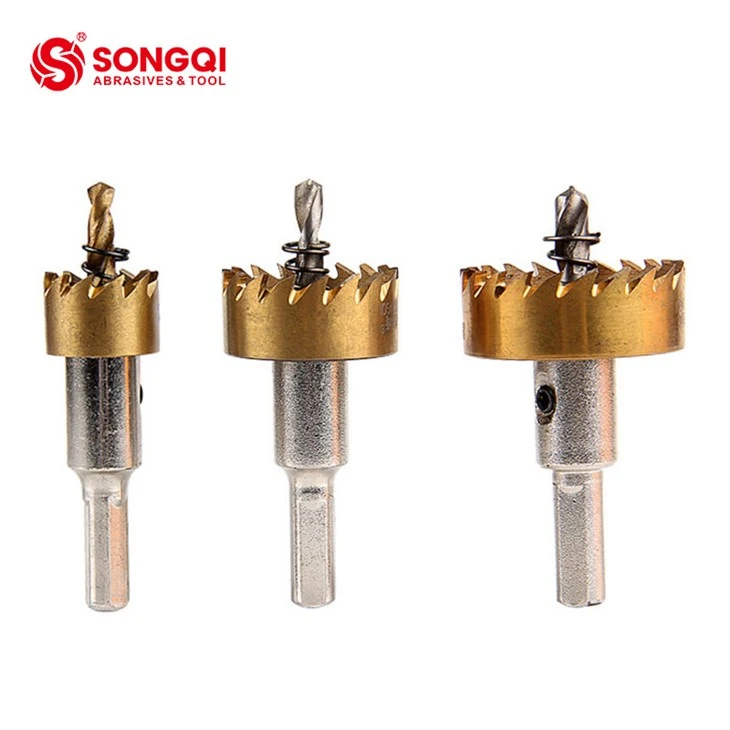
First off, you can’t make a consistent product with inconsistent raw materials. Simple as that. Most hole saws we make are either HSS (High-Speed Steel) or TCT (Tungsten Carbide Tipped), right? Our HSS ones, like the HSS Cobalt Hole Saw Drill Bit, use cobalt-alloyed steel because it stays sharp at high temps—perfect for metal cutting. But we don’t just take any steel batch off the shelf. We test every incoming coil to make sure the hardness is in the 65-67 HRC range, no more, no less. Too soft and it bends when you push down; too hard and it chips on the first cut. For TCT hole saws, the carbide tips have to be uniform too—we source tips from vetted suppliers that provide a metallurgy test certificate with every shipment, so we know the grain size is the same across the whole batch. I’ve had a bad raw material batch once years ago, where the steel was 2 HRC softer than specs, and it ended up costing us $40k in returns because contractors were snapping saws halfway through big jobs. That mistake made us way stricter on incoming material checks now.
Next up, the equipment we use can’t cut corners (pun very intended). We don’t rely on old, janky machines that drift 0.1mm off every few hundred pieces. Our main grinding lines are CNC-controlled, and we calibrate them every single morning before we start a shift, not just once a week. For the cutting teeth on HSS saws, the angle has to be exactly 10 degrees—too steep and it grabs too hard, too shallow and it doesn’t cut fast. The depth of the gullets (those grooves between teeth where the chips go) has to be identical too, because if one gullet is deeper than the others, it will clog faster and make the saw wobble. For TCT saws, we use a precision laser welder to attach the carbide tips, not manual welding. Manual welding would vary in heat, so some tips would fall off after 10 cuts, others after 50. The laser welder hits every tip with the same exact heat, leaving a perfectly consistent bond. We also use a special tool for centering the pilot bit, which is super important—if the pilot is even 0.5mm off, the whole hole will be misaligned, and the saw will walk all over the place. That pilot bit’s not an afterthought, either; we get our spiral flute combination drill bits (the pilots for most of our saws) from a trusted supplier, Spiral Flute Combination Drill, that matches our hardness specs so they don’t wear out before the hole saw body does.
Then there’s the process of coating and finishing, which is a big one for durability. If a hole saw isn’t coated right, it’ll rust mid-job or have too much friction that makes it overheat. We use a titanium nitride (TiN) coating for most of our HSS saws, and we make sure the coating thickness is 2-3 microns across the entire body, not just some spots. We test coating thickness with a magnetic gauge every 50 pieces, because if it’s too thin, it wears off after 10 holes, and if it’s too thick, it makes the saw bulkier and harder to fit in tight spaces. For TCT saws, we use a black oxide coating to reduce friction on tile and concrete, and we bake them at 200 degrees for 2 hours after coating to make sure it adheres properly. No half-baked (pun also intended) coating jobs here—we had a batch once where the oven was set 50 degrees too low, and the coating flaked off on every saw, so we had to scrap 2,000 pieces. That’s the kind of thing that makes consistency go out the window fast if you skip the small steps.
Now, let’s talk about testing every single unit, not just a sample. A lot of factories just pull 5-10 pieces from a batch and test those, but that’s a mistake. We test every hole saw we make? Wait, no, not every one—wait, no, let’s be real, that would take forever. But we test 100% of the first 50 pieces from every batch, and then we do random checks every 100 pieces after that. What do we test, exactly? We mount each saw on a drill press, run it at the right speed, cut a 1-inch hole through 1/4-inch steel, and measure the torque, the hole’s diameter, and if there’s any wobble. If one saw in the first 50 is off on diameter by even 0.2mm, we stop the line, check the machine, and fix it before we keep going. We also check the packaging, because if a hole saw is loose in the box, the teeth can get damaged in shipping—even a tiny chip on a tooth will make the saw cut rough. Our packaging guys have a checklist that says “make sure the saw sits snugly, no movement” and they sign off on every box. Oh, and the hex shank we use? Our power bits are from Hex Shank Phillips PH2 Magnetic Screwdriver Power Bit for screwdrivers, but for our hole saw arbors, we use shanks that are ground to exact size so they fit every drill chuck the same way—no wiggly shanks that make the saw spin unevenly.
Wait, also, our team—they’re not just guys pushing buttons on machines. We train every single operator on consistency, not just speed. A few years back, we were falling behind on orders, so we thought we could speed up the grinding shift, which led to a bunch of saws with uneven teeth. We had to rework 10,000 pieces, and that’s when we realized that we’d rather make 100 good pieces an hour than 200 bad ones. Now we pay our operators based on quality, not quantity—if their batch has less than 1% defect rate, they get a bonus. That’s a game-changer. Our quality control (QC) team works on the floor with the operators, not in a separate office, so if an operator notices a weird sound from the grinder, the QC guy is right there to check it, not waiting until the end of the shift. We also hold weekly huddles where everyone can bring up issues—last week, a grinding operator noticed that the tooth angle was drifting, so we called the maintenance guy, calibrated the machine, and avoided a whole batch of bad saws.
Another thing that people don’t talk about is inventory management. We keep our work-in-progress (WIP) inventory small—no hoarding 10,000 half-finished saws in a corner for months. Steel oxidizes over time, so if a saw sits around for 6 months, the coating might start to degrade. We only make what we need for the next 2 weeks of orders, so every piece we finish is fresh, and the material hasn’t had time to go bad. We also track every batch all the way back to the raw material—if a customer has an issue with a saw, we can look up which steel batch it was made from, which machine made it, who operated it, and what the test results were. That level of traceability makes it easy to fix problems fast, and it means we don’t have inconsistent batches slipping through.
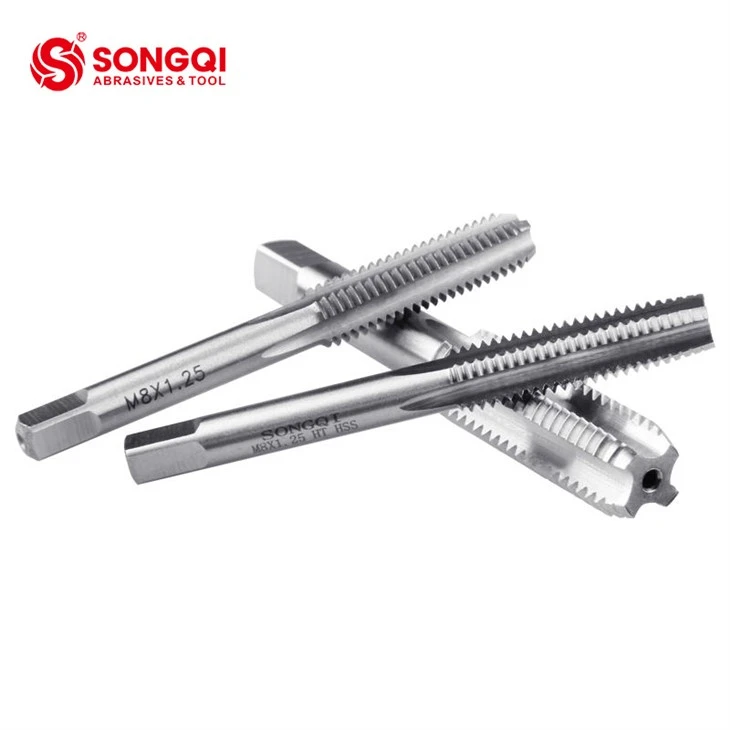
Oh, and let’s not forget about specialty hole saws, like our TCT ones for concrete and tile. Those have carbide tips that are more brittle than HSS, so we have to adjust our process a little. We don’t over-torque when we’re attaching the tips—too much pressure and the carbide cracks. We test every TCT saw by cutting through 1/2-inch concrete, because concrete is way harder than metal, and if the tip holds up there, it’ll hold up anywhere. We also make sure the tooth spacing is consistent on TCT saws too—if the tips are spaced unevenly, the saw will skip over the concrete instead of cutting. For our metal hole saws, we sometimes use M2 straight fluted machine taps for testing the pilot hole, just to make sure the pilot bit fits right and the hole is threaded correctly if needed—wait, that’s a side thing, but it’s part of the quality check too, that’s why we use M2 STRAIGHT FLUTED MACHINE TAPS for our test setup sometimes.
I know a lot of hole saw factories cut corners—they use cheap raw steel, old machines that aren’t calibrated, and only test a tiny sample. But that just leads to customer complaints, returns, and lost repeat business. We’ve been in this long enough to know that consistency is what makes customers come back. A contractor who can grab a hole saw from our box and know it’ll cut a perfect hole every time is going to order from us again, not some random brand from a big-box store. Even DIYers post on forums about how our saws don’t walk, don’t chip wood, don’t snap on the first metal cut— that’s word of mouth that money can’t buy.
If you’re a contractor looking for reliable hole saws for your jobs, or a hardware store owner wanting to stock a product your customers can trust, we’re here to help. We can custom-make saws for specific materials, adjust sizes, and even work with your team to make sure the specs fit exactly what you need. We don’t do minimum order sizes that are impossible for small businesses, either—whether you need 10 saws for a one-off job or 10,000 for a big construction project, we can handle it. Hit us up to start a conversation about your hole saw needs, and let’s make something that works as consistently as our process does.
References:
- Metallurgy of High-Speed Steels for Cutting Tools, International Journal of Machine Tools and Manufacture, 2018
- Precision CNC Grinding for Cutting Tools, Industrial Engineering Journal, 2020
- Coating Technologies for Durable Power Accessories, Surface Engineering, 2019
- Quality Control Protocols for Hole Saw Manufacturing, Journal of Manufacturing Processes, 2021
- Effect of Raw Material Consistency on Cutting Tool Performance, Materials Science and Engineering, 2022